Travel tips
First-Time Cooking Class in Marrakech: The Complete Guide
A cooking class is one of the most popular things to do in Marrakech, and for good reason: it compresses an entire education in Moroccan food culture into a single morning or afternoon. But if you have never done one, the range of options can feel overwhelming. This guide walks you through everything -- formats, what to expect, what to wear, how to handle dietary needs, and the practical details that most booking pages leave out.
At a glance
- Most classes last three to five hours and include a market visit, hands-on cooking, and a shared meal.
- You do not need any cooking experience -- classes are designed for complete beginners.
- Vegetarian, vegan, and gluten-free menus are widely available if you request them in advance.
- Half-day classes are the most common format; full-day options add more dishes and deeper technique.
- Book at least two to three days ahead in high season (October to April) to secure your preferred date.
Why take a cooking class in Marrakech
Marrakech is the epicentre of Moroccan culinary tourism. The city has a density of cooking schools that few places in North Africa can match, ranging from riad kitchens in the Medina to purpose-built teaching studios in Gueliz and the Palmeraie. A class gives you something a restaurant meal cannot: the technique behind the flavour, the logic of spice combinations, and the muscle memory of rolling couscous or layering a pastilla.
Beyond the food itself, a class is a window into daily Moroccan life. You shop alongside locals in the souk, learn about ingredients that most guidebooks skip, and sit down to eat what you have cooked with your fellow students. It is social, sensory, and surprisingly relaxed -- a counterpoint to the intensity of the Medina outside.
Most visitors find a cooking class to be among the highlights of their trip. It works for solo travellers, couples, families with children, and groups of friends. No prior cooking skill is expected, and the hosts are accustomed to every level from complete novice to confident home cook.
Formats and what they include
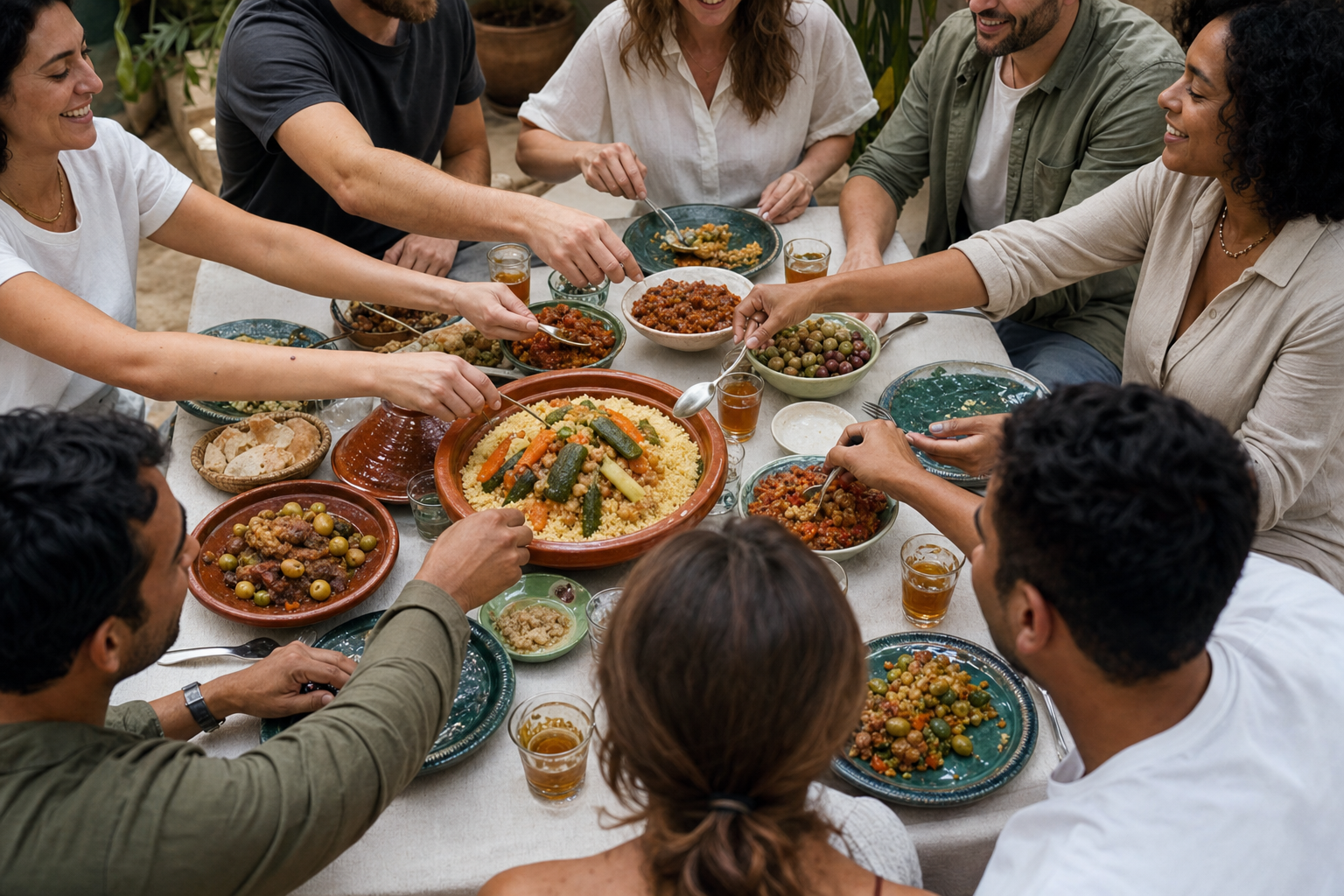
The standard Marrakech cooking class runs about four hours, usually in the morning (starting around 9 or 10am). A typical session begins with a guided trip to a nearby souk or market, where you buy vegetables, spices, and sometimes meat or fish. You return to the kitchen, prepare a menu of three to five dishes under the guidance of a Moroccan cook, and then sit down together to eat everything you have made.
Full-day classes stretch to six or seven hours and typically cover more dishes -- sometimes a full three-course meal plus bread, salads, and pastries. Some include a deeper market tour or a visit to a spice shop. Half-day formats are more common and suit most visitors, especially those with tight itineraries.
Private classes are available at most schools and let you set the pace, choose your menu, and ask as many questions as you like. Small-group classes (usually four to twelve people) are the standard and tend to be lively and social. Both formats work well; the choice comes down to budget and how much personalisation you want.
How to choose the right class
Start with location. Medina-based classes often include a souk walk as part of the experience, which is a real highlight. Schools in Gueliz or the Palmeraie tend to have larger, more modern kitchens and sometimes rooftop terraces, but you will usually drive or be transferred rather than walk to the market. Neither is better -- it depends on what you value more: atmosphere or space.
Next, consider the menu. Most classes teach tagine, couscous, Moroccan salads, and a dessert or pastry. If you have a specific interest -- pastilla, msemen and bread, or Moroccan pastries -- look for a school that offers that as a focus. Some classes rotate their menu daily, which means the dishes you learn depend on the day you book.
Finally, read recent reviews rather than relying on star ratings alone. The best classes are led by cooks who explain not just the how but the why -- why preserved lemons need months, why ras el hanout varies from shop to shop, why you steam couscous three times. That cultural depth is what separates a memorable class from a paint-by-numbers session.
Practical tips for the day
Wear comfortable, closed-toe shoes, especially if the class includes a souk walk -- the Medina lanes are uneven and can be slippery. Dress in layers: kitchens get warm, but the walk to market can be cool in winter. An apron is almost always provided, but avoid wearing clothes you would be upset to stain.
Bring a camera or phone for photos -- most hosts encourage it and some will take group photos for you. A small notebook is useful if you want to jot down tips that go beyond the printed recipe card. Leave large bags at your hotel; a crossbody or small backpack is enough for the market walk.
Arrive on time or a few minutes early. Late arrivals can miss the market visit, which is often the most atmospheric part. If you have dietary needs, communicate them when you book, not on the day -- this gives the kitchen time to adjust the menu and source ingredients. Most schools handle vegetarian and vegan requests comfortably; less common restrictions (severe nut allergy, for example) may need more notice.
What you take home
Every class worth booking sends you away with printed or emailed recipes so you can recreate the dishes at home. Some schools include a small spice packet -- ras el hanout, cumin, or saffron -- as a take-home gift. The real takeaway, though, is technique: how to layer a tagine, how to roll couscous by hand, how to judge the doneness of msemen by sound and colour.
If you want to continue cooking Moroccan food at home, consider picking up a clay tagine or a bag of spices from the souk while you are still in Marrakech. Several schools will advise you on what to buy and where. For a deeper understanding of the key ingredients, see our glossary of Moroccan ingredients.
Frequently asked questions
Do I need cooking experience to take a class in Marrakech?
No. Classes are designed for all levels, and the vast majority of participants are beginners. Instructors walk you through every step, from chopping vegetables to assembling a tagine. If you can hold a knife and stir a pot, you will do fine.
How far in advance should I book?
In high season (October through April), booking two to three days ahead is wise -- popular schools fill up, especially for small-group sessions. In summer, you can often book the day before or even same-day, but earlier is always safer if you have a preferred school.
Can children join a cooking class?
Yes. Many schools welcome children from around age six and up. Some offer dedicated family and kids classes with simplified tasks and child-friendly dishes. Check with the school when booking to confirm their minimum age.
What if I have food allergies or dietary restrictions?
Mention them when you book, not on arrival. Most schools can accommodate vegetarian, vegan, gluten-free, and nut-free requests if given at least 24 hours' notice. Severe allergies may require a private class so the kitchen can control cross-contamination.
Is the market visit included in every class?
Not always. Most Medina-based classes include a souk walk. Some schools outside the Medina pre-purchase ingredients and skip the market trip. If the market visit is important to you, confirm it is included before booking.