- guides
- ingredients
- recipes
Moroccan Food and Health: The Nutritional Benefits of Traditional Dishes
Moroccan cuisine is one of the healthiest in the world — and this is not marketing. It is built on olive oil, legumes, vegetables, lean proteins, anti-inflammatory spices and slow cooking. The traditional Moroccan diet aligns almost perfectly with Mediterranean diet principles, which have the strongest evidence base of any dietary pattern for long-term health.
- Read
- 7 min
- Updated
- 23 July 2026
- Sections
- 4
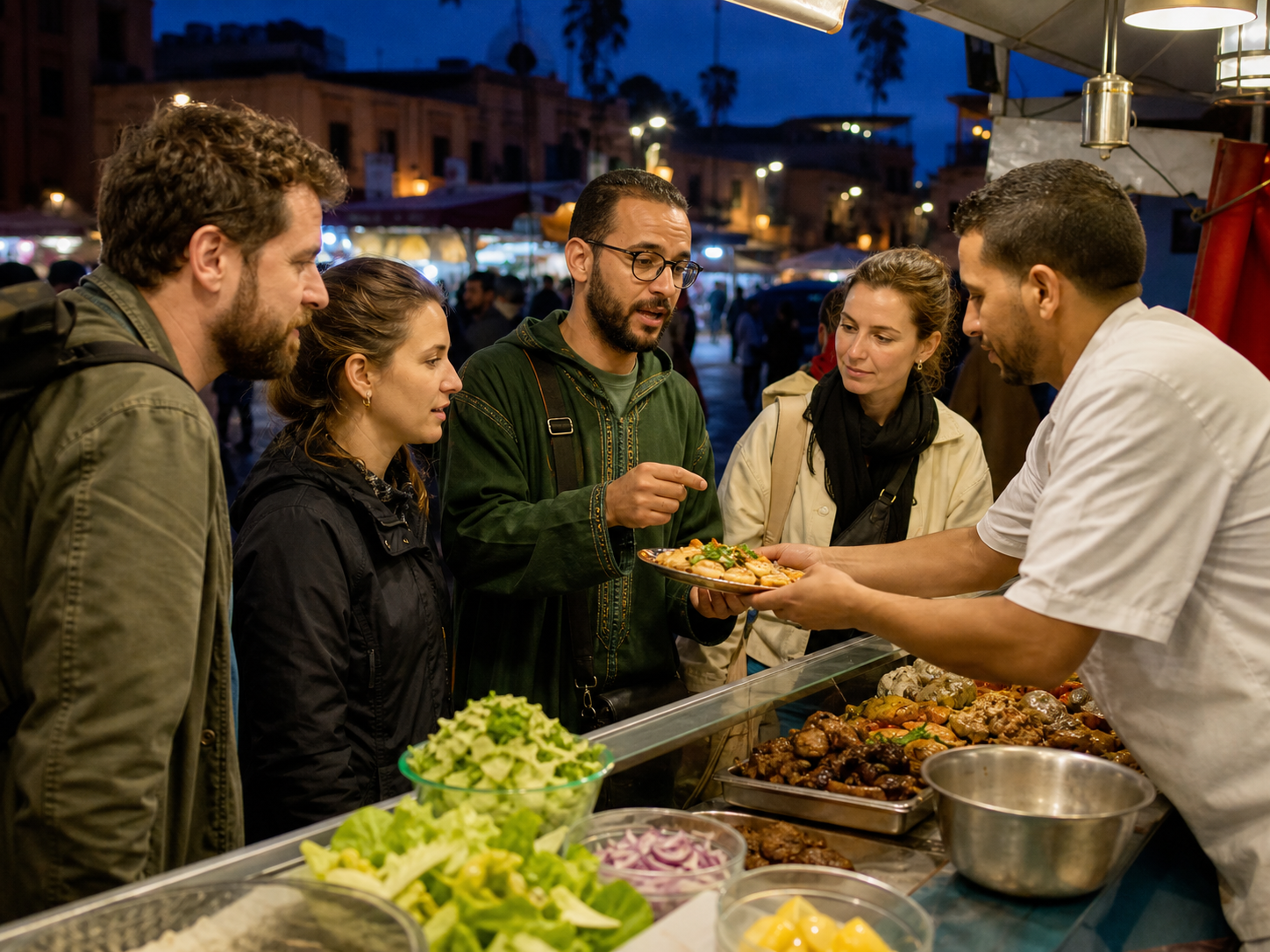
Anti-inflammatory spices
Moroccan cooking uses cumin, turmeric, ginger, cinnamon and saffron in quantities that deliver meaningful doses of anti-inflammatory compounds. Turmeric contains curcumin; ginger contains gingerols; cinnamon contains cinnamaldehyde. These are not trace amounts — a Moroccan tagine contains teaspoons, not pinches.
The combination of turmeric and black pepper (common in ras el hanout) increases curcumin absorption by up to 2000%. The spice blends are nutritionally synergistic.
Olive oil and healthy fats
Morocco is a major olive oil producer, and traditional cooking uses olive oil as the primary cooking fat. Argan oil — used in amlou and salads — is rich in vitamin E and oleic acid. These monounsaturated fats are the cornerstone of the Mediterranean diet's cardiovascular benefits.
Legumes and slow cooking
Lentils, chickpeas and fava beans appear in harira, bessara, loubia and many tagines. Legumes are among the most health-promoting foods: high in fibre, plant protein, folate and minerals. Slow cooking breaks down complex sugars that cause digestive discomfort, making them more digestible.
The tagine's slow-braising method also preserves nutrients better than high-heat frying or grilling.
What makes Moroccan food less healthy
Honestly: sugar and refined flour. Mint tea is heavily sweetened (3-4 sugar cubes per glass). Moroccan pastries (chebakia, ghriba) are deep-fried and sugar-drenched. White bread (khobz) is eaten at every meal in large quantities. The healthiest approach: eat the tagines and salads generously, and moderate the tea, pastries and bread.
Frequently asked questions
Is Moroccan food a Mediterranean diet?
Substantially yes. Traditional Moroccan cooking shares the Mediterranean diet's foundations: olive oil, legumes, vegetables, fish, moderate meat, and abundant spices. The main divergences are higher sugar intake (mint tea, pastries) and more bread.
Is Moroccan food good for weight loss?
The tagine-and-salad pattern is excellent: high protein, high fibre, moderate fat, no processed food. Avoid the bread basket, sugary tea and pastries, and traditional Moroccan food is naturally calorie-appropriate.