- techniques
- recipes
- cooking classes
Moroccan Cooking Techniques: A Visual Guide to Methods and Skills
Moroccan cooking has a small vocabulary of techniques applied to a large vocabulary of ingredients. Master six techniques — slow braising, steaming, grilling, preserving, spice blending and bread making — and you can cook almost anything in the Moroccan repertoire. This guide explains each technique clearly enough that you can apply it at home.
- Read
- 9 min
- Updated
- 23 July 2026
- Sections
- 5
Slow braising: the tagine method
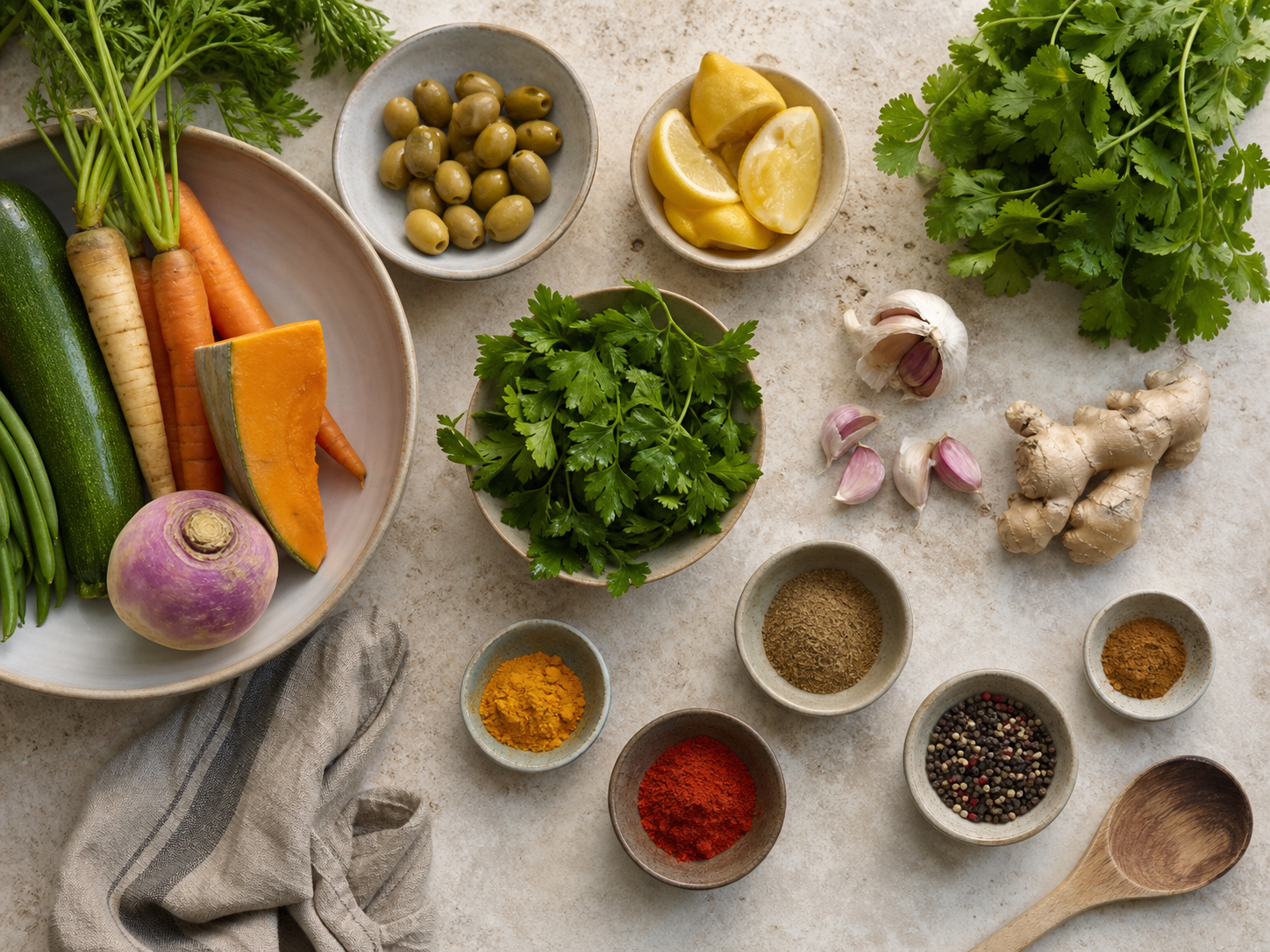
The technique behind every tagine: sweat onions and spices in olive oil, add protein and vegetables, add a small amount of liquid, cover tightly, and cook on the lowest possible heat for 1.5-3 hours. The liquid reduces gradually, concentrating flavour. The meat becomes fall-apart tender. The sauce becomes thick and glossy.
Key principle: less liquid than you think. A tagine is not a soup — start with 200-300ml of water for a family-size tagine. The protein and vegetables release their own juice. If the pot runs dry, add water in small increments. See our slow braising guide.
Steaming: couscous and vegetables
Hand-rolled couscous is steamed, not boiled. The traditional method uses a couscoussier (a double-stacked pot): the stew simmers in the bottom, and the couscous steams over it in the perforated top. The couscous is steamed three times, raked with oil between rounds, until each grain is fluffy and separate.
At home, a colander lined with cheesecloth over a simmering pot achieves the same result. The technique matters more than the equipment.
Charcoal grilling: mechoui and brochettes
Moroccan grilling uses charcoal, not gas. The heat is intense and direct, producing the char that defines mechoui (whole roast lamb) and brochettes (kebabs). The spice rub (cumin, paprika, salt) is applied generously before grilling.
For home cooks: a charcoal grill or very hot oven (250°C) replicates the intensity. Gas grills work but produce less char.
Preserving: lemons, olives, dried meats
Moroccan preserving techniques transform fresh ingredients into concentrated flavour bombs. Preserved lemons are salt-cured for 30 days until the rind becomes soft and intensely flavourful. Olives are cured in brine or dry-salt. Khlii (dried, spiced beef) is preserved in fat — Morocco's answer to confit.
These preserved ingredients are building blocks, not meals: a quarter of a preserved lemon transforms a chicken tagine from good to extraordinary.
Spice blending: building ras el hanout
Blending spices is the invisible technique. A good Moroccan cook does not reach for pre-mixed ras el hanout — they combine individual spices for each dish. The base (cumin, coriander, black pepper) stays constant; the upper notes (cinnamon, cardamom, clove, rose) vary by dish.
The technique: toast whole spices in a dry pan until fragrant (60-90 seconds), then grind. The difference between freshly toasted and pre-ground is enormous.
Frequently asked questions
What is the most important Moroccan cooking technique to learn?
Slow braising (the tagine method). It is the foundation of Moroccan cooking, it is forgiving, and it produces the dishes most people want to eat. Master it and everything else follows.
Can I learn these techniques at a cooking class in Marrakech?
Most cooking classes teach the tagine method and bread-making. For advanced techniques (couscous steaming, preserving), look for full-day or multi-day intensive classes.