- food tours
- cooking classes
History and Food Culture of Morocco
Moroccan cuisine is one of the most complex in the world because it is one of the most layered. It is not one tradition but five, built over a thousand years: the Berber base of couscous, preserved foods and hearth cooking; the Arab introduction of spices, sugar and the tagine pot; the Andalusian refinement that brought pastilla, almonds and delicate pastries; the Ottoman-era expansion of street food; and the French colonial overlay that left behind patisserie, cafe culture and wine. Understanding these layers transforms how you taste the food — and the best cooking classes and food tours make this history explicit.
- Read
- 9 min
- Updated
- 23 July 2026
- Sections
- 5
The Berber foundation
The oldest layer of Moroccan food is Berber (Amazigh). Couscous is a Berber invention — hand-rolled semolina steamed over a stew, the technique unchanged for a millennium. Preserved foods (dried meat, salted butter, fermented barley) are Berber survival techniques from the Atlas and Saharan edge. Amlou (almond, argan oil and honey paste) is a pure Berber preparation. This foundation — grains, preserved foods, argan oil, mountain herbs — remains the backbone of Moroccan home cooking, especially in rural areas.
Arab spice and sugar traditions
The Arab conquest from the 7th century onward introduced the spice vocabulary that defines Moroccan food today: cumin, ginger, saffron, cinnamon, coriander. It also introduced the sweet-savoury combination — fruit with meat, sugar with spice — that makes Moroccan tagines distinctive. The tagine pot itself is an Arab introduction, and the layered braise technique (onion base, spice, protein, fruit, nut garnish) is Arab culinary logic applied to local ingredients.
Andalusian refinement
When Muslim and Jewish communities were expelled from Spain in the 15th century, they brought Andalusian culinary sophistication to Morocco's imperial cities — Fes, Marrakech, Meknes, Rabat. Pastilla (the layered pigeon or chicken pie with almonds and cinnamon sugar) is the most famous Andalusian legacy. The refinement of pastries — kaab el ghazal, briouats — and the use of almonds, orange-blossom water and rose water are Andalusian contributions. Fes, the intellectual capital, inherited the most, and its cuisine remains the most elaborate in Morocco.
French colonial and modern layers
The French protectorate (1912-1956) left behind a patisserie tradition (the bakeries of Casablanca and Rabat still produce excellent croissants and pain au chocolat), cafe culture, wine production (the Meknes region), and the habit of a baguette with meals in urban areas. These sit alongside, rather than replacing, the older traditions. Modern Marrakech adds a cosmopolitan restaurant scene that reinterprets traditional dishes with contemporary technique.
Experiencing food history on a tour or in a class
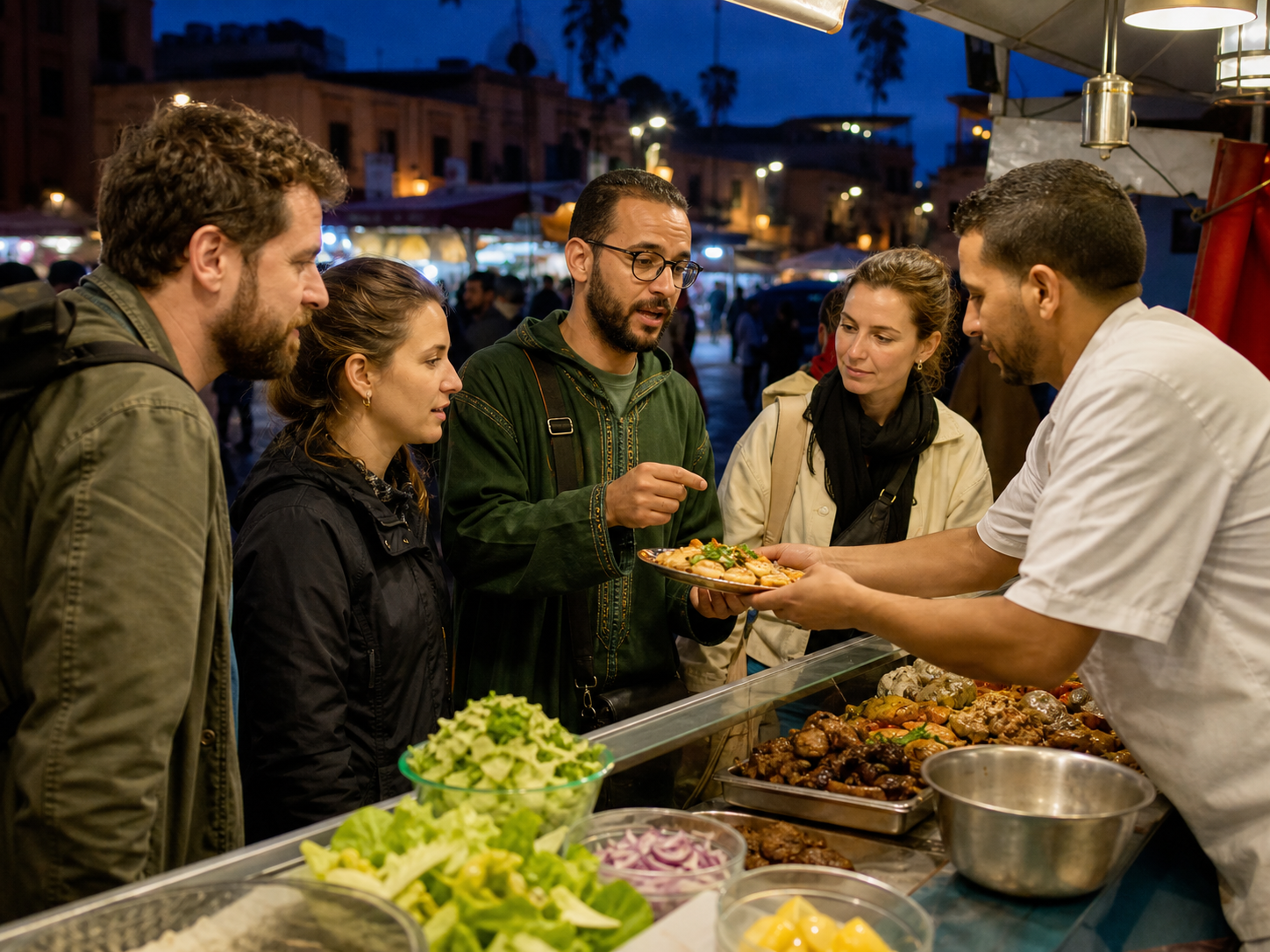
The best food tours in the Medina trace these layers geographically: the Berber grain mills, the Arab spice souks, the Andalusian pastry shops, the French bakeries of Gueliz. A good cooking class explains the history behind each dish as you cook it — why pastilla has sugar and cinnamon (Andalusian), why the tagine uses preserved lemon (Arab preservation technique applied to North African citrus), why couscous is steamed three times (Berber patience). The food becomes a history lesson you can eat.
Frequently asked questions
Why is Moroccan food so different from other North African cuisines?
Morocco's unique position — between the Sahara and the Atlantic, at the western end of the Arab world, across the strait from Spain — meant it absorbed influences that other North African countries did not. The Andalusian influx (the expelled Spanish Muslims and Jews) gave it a sophistication unique in the region, and its relative isolation from Ottoman influence preserved older Arab traditions.
Which cooking class teaches the most about food history?
Look for classes that include a market visit and a chef who explains the cultural context of each dish. Souk-to-table classes are naturally history-rich because the market itself is a living museum of Morocco's food traditions — the spice stalls, the grain sellers, the olive merchants all trace back centuries.