Audience
Private Vegan Moroccan Cooking Class in Marrakech
Moroccan cuisine is more plant-friendly than most North African and Middle Eastern traditions, but it is not inherently vegan — butter (smen), honey, eggs, and meat are deeply embedded in the repertoire. A dedicated vegan class goes beyond the vegetarian option by removing all animal products while keeping the bold, spice-driven flavours that make Moroccan food distinctive. The results are satisfying, complex, and entirely plant-based.
- Duration
- 3-4 hours
- Group size
- Private or small group (2-8)
- Level
- All levels
- Price
- Mid-range
- Pickup
- Can be included in the quote
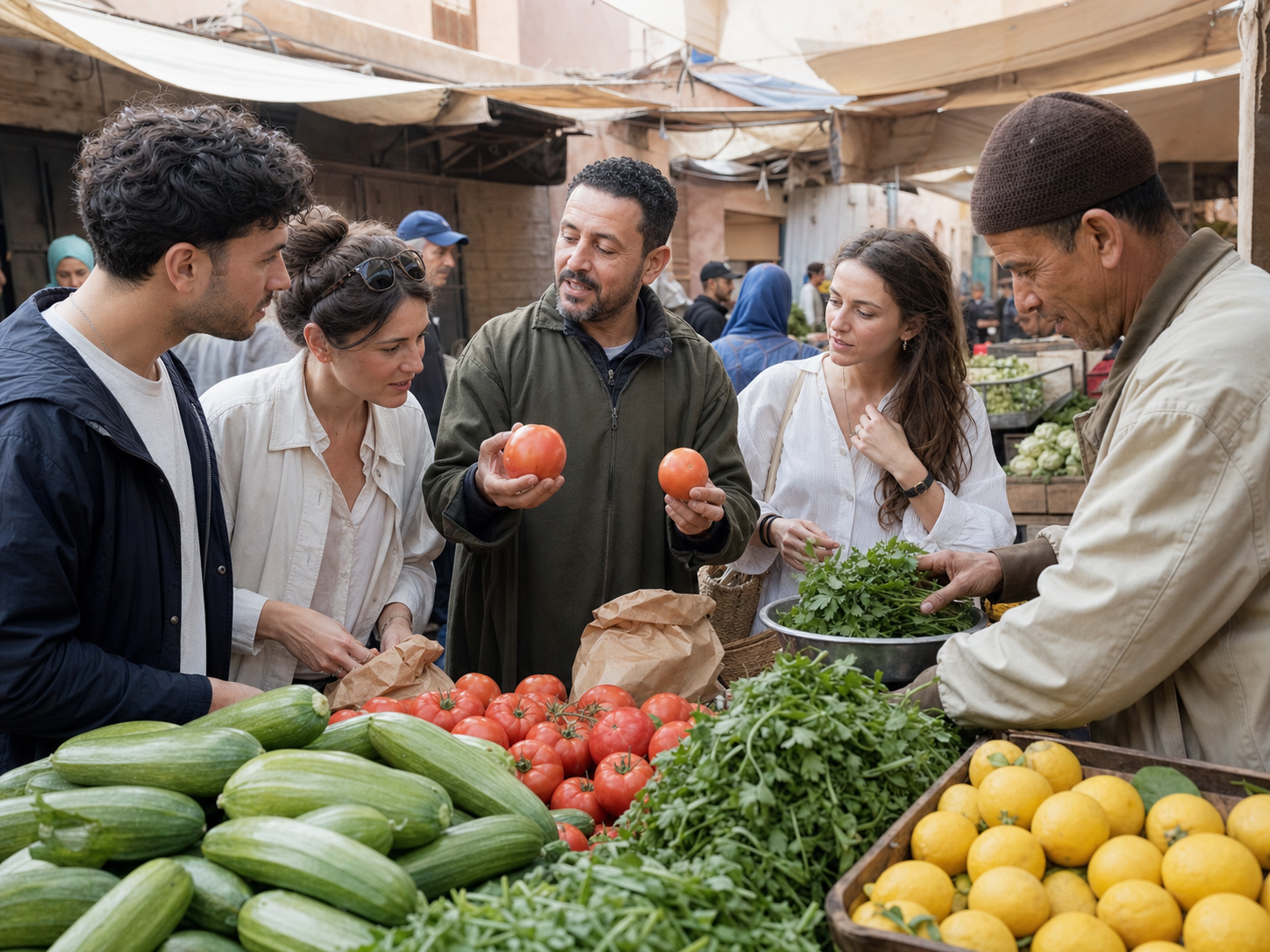
What this class covers
The best vegan Moroccan dishes are not adaptations — they are traditional recipes that happen to contain no animal products. Vegetable tagines braised in olive oil, tomato, and spices; zaalouk made with charred aubergine and garlic; harira soup thickened with lentils and chickpeas instead of the sometimes-added lamb; and msemen flatbread made with olive oil instead of butter. These dishes exist in the Moroccan canon already.
Where adaptation is needed, the class teaches you how. Smen (aged butter) is replaced with olive oil or argan oil — argan is native to Morocco and adds a similar richness. Honey in sweet-savoury tagines gives way to date syrup or pomegranate molasses. Eggs in pastries are replaced or the recipe pivots to naturally egg-free sweets like date-and-almond balls or coconut-and-semolina treats.
The spice work is identical to any other Moroccan class — ras el hanout, cumin, saffron, ginger, cinnamon — because these are all plant-based. A vegan class loses no flavour complexity; it simply builds richness through spices, slow cooking, and good olive oil instead of butter and meat stock.
What you'll cook
- Vegetable tagine with preserved lemon — Seasonal vegetables slow-braised with chickpeas, olives, and preserved lemon in olive oil.
- Zaalouk — Smoky aubergine and tomato dip — naturally vegan and one of the core Moroccan salads.
- Harira (vegan version) — The national soup made with lentils, chickpeas, tomato, and herbs — without the lamb some versions include.
- Msemen with olive oil — The layered flatbread made with olive oil instead of butter — crispy, flaky, and entirely plant-based.
- Date and almond energy balls — Ground almonds, Medjool dates, cinnamon, and orange blossom water — a naturally vegan Moroccan sweet.
How the class runs & how long it takes
-
Ingredient review
Walk through all ingredients, confirming every component is plant-based — no hidden honey, butter, or eggs.
-
Spice preparation
Toast and grind spices, prepare chermoula or charmoula paste with fresh herbs and olive oil.
-
Hands-on cooking
Build the tagine, prepare salads and soup, shape and cook bread — about 90 minutes of active cooking.
-
Vegan feast
Sit together and eat the full spread, with mint tea (no honey) to finish.
What to expect
Expect hearty, flavourful food that does not feel like it is missing anything. Moroccan spices — cumin, saffron, ginger, cinnamon, paprika — provide depth and warmth, and slow-cooked vegetables in olive oil develop a richness that rivals meat-based dishes.
Expect honesty about what is adapted and what is traditional. A good instructor will tell you which dishes are naturally vegan in Moroccan cuisine and which have been modified, so you understand the context.
Expect to learn techniques that transfer directly to your home kitchen. Vegan Moroccan cooking relies on widely available ingredients — tinned chickpeas, olive oil, common spices, root vegetables — that you can source anywhere.
Usually included
- All plant-based ingredients
- Hands-on cooking instruction
- Full vegan meal of everything you prepare
- Vegan recipe cards
Who this class suits
- Strict vegans who want a fully plant-based kitchen environment
- Plant-based eaters who want to learn flavourful, spice-driven recipes
- Travellers who found the vegetarian class still included dairy or eggs and want something stricter
Maybe not for you if: If you are vegetarian but happy with eggs, dairy, and honey, the vegetarian class offers a wider menu — this class is specifically for those who want zero animal products.
How to choose the right class
- Ask whether the class is fully vegan or vegetarian-with-vegan-options — the difference matters if you are strict about it.
- Confirm no butter (smen), honey, or eggs are used anywhere — including in bread, pastries, and dressings.
- Check whether argan oil is used — it is a Moroccan plant-based fat that adds excellent richness to vegan dishes.
- Ask if the kitchen is shared with non-vegan cooking sessions and whether cross-contamination is managed.
Frequently asked questions
How is this different from the vegetarian cooking class?
The vegetarian class may include butter, eggs, honey, and dairy — all common in Moroccan cooking. The vegan class removes all animal products entirely, using olive oil, argan oil, date syrup, and plant-based alternatives.
Is Moroccan food easy to make vegan?
Easier than most cuisines. Many core dishes (tagines, salads, soups) are already built on vegetables, legumes, and olive oil. The main adaptations are removing butter from bread and honey from sweet-savoury dishes.
Will I miss the flavour without meat and butter?
Not in a well-taught class. Moroccan spice blends, slow cooking, and good olive oil provide depth and complexity. The cuisine's flavour comes from spices and technique, not from animal products.
Can I find vegan food easily in Marrakech outside the class?
Vegetable tagines, salads, and bread are available everywhere, but restaurants may use butter or honey by default. Tell your server you are vegan and ask about cooking fats. The words in Darija are 'bla zibda' (without butter) and 'bla assel' (without honey).
Is Moroccan mint tea vegan?
The tea itself (gunpowder green tea and mint) is vegan. Sugar is standard. Some riads serve it with honey — ask for sugar only if you want to keep it vegan.
Try the recipes at home
Booked, or just browsing? These free step-by-step recipes cover the dishes this class teaches: