Audience
Private Gluten-Free Cooking Class in Marrakech
A surprising amount of traditional Moroccan cooking is naturally gluten-free. Tagines are thickened by slow reduction, not flour. Salads are vegetable-forward. Spice blends contain no wheat fillers. The challenge for coeliac travellers is cross-contamination — bread is everywhere in a Moroccan kitchen, and couscous is made from semolina wheat. A dedicated gluten-free class solves both problems.
- Duration
- 3-4 hours
- Group size
- Private or small group (2-8)
- Level
- All levels
- Price
- Mid-range to premium
- Pickup
- Can be included in the quote
What this class covers
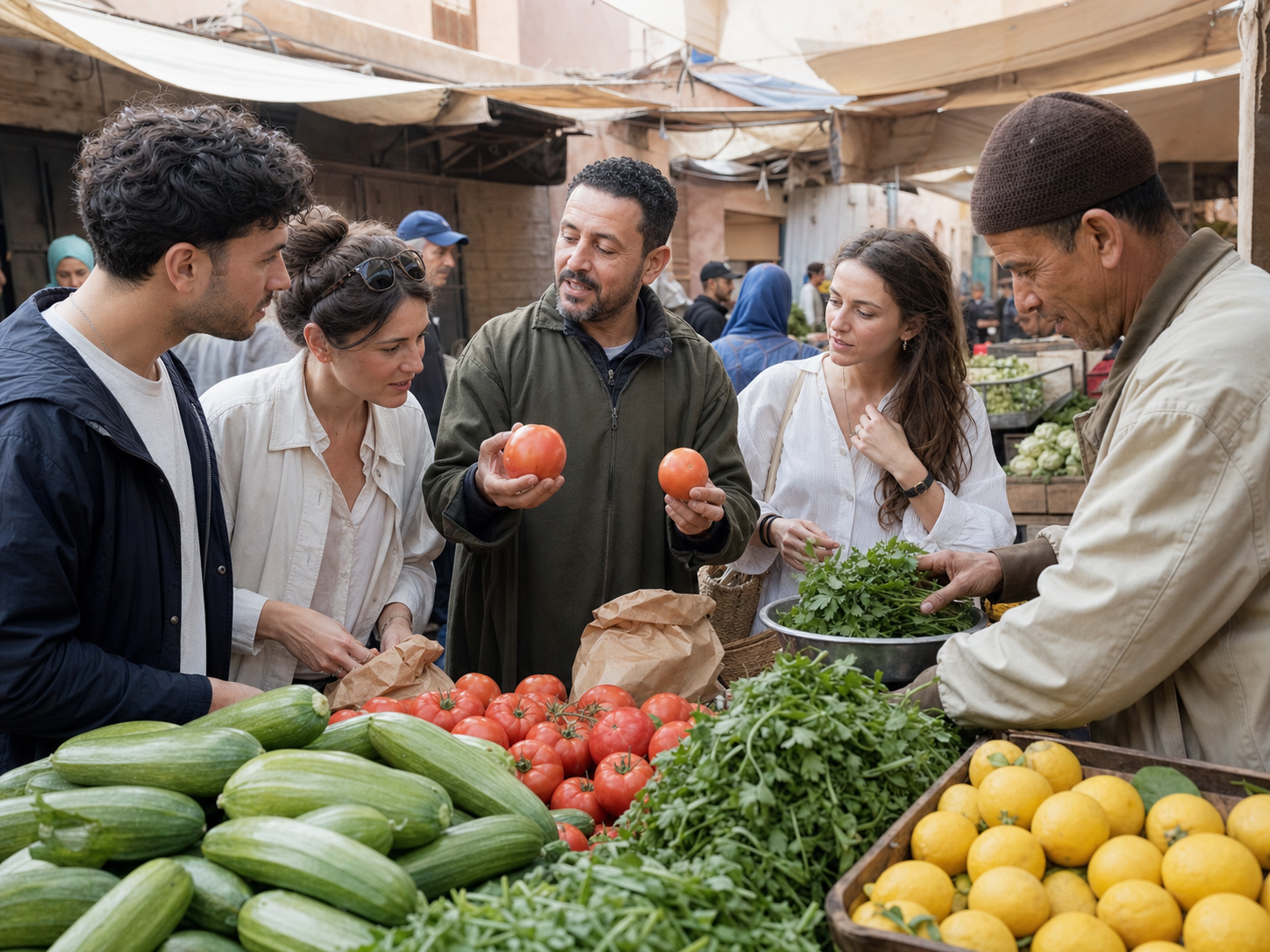
This class focuses on the many Moroccan dishes that contain no wheat by tradition. Tagines rely on onion, tomato, and long cooking times to build body — there is no roux, no flour dredge, no breadcrumb coating. Moroccan salads are dressed with olive oil, lemon, and cumin. Chermoula marinades are built from fresh herbs, garlic, and spices. These are naturally gluten-free recipes that do not need adaptation.
Where traditional recipes do contain gluten — couscous, msemen flatbread, pastilla filo — this class either substitutes or replaces. You might make a chickpea flour flatbread instead of khobz, or steam cauliflower couscous in place of semolina. The goal is to keep the flavour profile authentically Moroccan while removing every source of gluten.
Cross-contamination matters if you are coeliac rather than intolerant. A good gluten-free class uses separate chopping boards, clean pots, and confirms that shared spice jars have not been contaminated by flour-dusted hands. Confirm these practices when you book.
What you'll cook
- Chicken tagine with preserved lemon and olives — Naturally gluten-free — the sauce thickens from slow-cooked onion and tomato, never flour.
- Zaalouk (smoky aubergine dip) — Charred aubergine mashed with tomato, garlic, cumin, and olive oil. No bread required for dipping — serve with crudites.
- Chermoula baked fish — Fresh fish marinated in a herb-and-spice paste, then baked. Entirely wheat-free.
- Carrot and orange blossom salad — Grated carrot with cinnamon, orange blossom water, and a citrus dressing.
- Almond and date energy balls — Ground almonds, Medjool dates, and a touch of rose water — a naturally gluten-free Moroccan sweet.
How the class runs & how long it takes
-
Introduction and ingredient check
Review all ingredients for gluten content, confirm preparation surfaces are clean and dedicated.
-
Spice blending
Build your own ras el hanout from whole spices — confirming every component is gluten-free.
-
Hands-on cooking
Prepare the tagine, salads, fish, and dessert over about 90 minutes of active cooking.
-
Sit-down tasting
Eat everything together, discuss how to recreate these dishes at home with gluten-free sourcing.
What to expect
Expect to discover how much Moroccan cuisine is naturally wheat-free. The tagine tradition developed around slow braising, not flour-thickened sauces, so most of the classic dishes need zero adaptation. You will leave with a repertoire of recipes you can cook at home without hunting for specialty ingredients.
Expect your host to take cross-contamination seriously if you flag coeliac disease. However, you should confirm practices in advance — not every kitchen distinguishes between gluten intolerance and coeliac disease, and standards vary between hosts.
Expect bold, satisfying food. Removing gluten from Moroccan cooking does not remove flavour — the cuisine's depth comes from spices, slow cooking, and fresh produce, not from wheat.
Usually included
- All gluten-free ingredients sourced in advance
- Dedicated preparation surfaces
- Sit-down meal of your dishes
- Gluten-free recipe cards
Who this class suits
- Coeliac travellers who need a guaranteed gluten-free environment
- Gluten-intolerant guests who want to learn safe Moroccan recipes
- Health-conscious cooks interested in naturally wheat-free cuisines
Maybe not for you if: If you specifically want to learn bread-making or couscous from scratch (with semolina), choose a different class — those are wheat-based by definition.
How to choose the right class
- Ask whether the kitchen handles gluten-free as a preference or as a strict coeliac protocol — the difference is cross-contamination practices.
- Confirm that spice blends are made from scratch or sourced from verified gluten-free suppliers.
- Check whether the class substitutes gluten-free versions of wheat dishes (like chickpea bread) or simply focuses on naturally wheat-free recipes.
- If you have additional allergies (nuts, dairy), confirm the kitchen can accommodate multiple restrictions simultaneously.
Frequently asked questions
Is Moroccan food generally gluten-free?
Many core dishes are — tagines, salads, grilled meats, and chermoula fish contain no wheat. However, bread (khobz) is served at every meal, couscous is semolina, and pastilla uses filo pastry. A dedicated class avoids or substitutes these.
Can a coeliac safely eat at a regular Moroccan cooking class?
It depends on the kitchen. Cross-contamination from bread flour is the main risk. A class specifically designed for gluten-free cooking will use dedicated surfaces and utensils, while a general class may not.
What replaces bread in a gluten-free Moroccan meal?
Some classes make chickpea flour flatbread or beghrir-style pancakes from rice flour. Others simply serve the tagine with roasted vegetables or rice instead of bread — historically, not every Moroccan meal required wheat bread.
Are Moroccan spice blends gluten-free?
Whole spices are naturally gluten-free. Pre-ground blends from souk stalls occasionally contain flour as an anti-caking agent, so a careful class grinds spices fresh or sources from verified suppliers.
Can I buy gluten-free ingredients in Marrakech to cook at home?
Yes. Whole spices, preserved lemons, olives, fresh produce, meat, and fish are all naturally gluten-free and widely available. Specialty items like gluten-free flour are found in Carrefour and other modern supermarkets in Gueliz.
Try the recipes at home
Booked, or just browsing? These free step-by-step recipes cover the dishes this class teaches: