Tanjia marrakchia (Marrakech speciality)
Best Tanjia Restaurants in Marrakech — The City's Own Slow-Cooked Speciality
Tanjia is Marrakech's dish and Marrakech's alone. Cooked in a tall clay urn sealed with parchment and slow-baked for hours in the dying embers of a hammam furnace, it predates modern ovens and remains one of the most distinctive eating experiences in Morocco. Many cooking classes teach it, but nothing beats eating the real thing.
- City
- Marrakech
- Cuisine
- Tanjia marrakchia (Marrakech speciality)
- Typical price
- 80-200 MAD
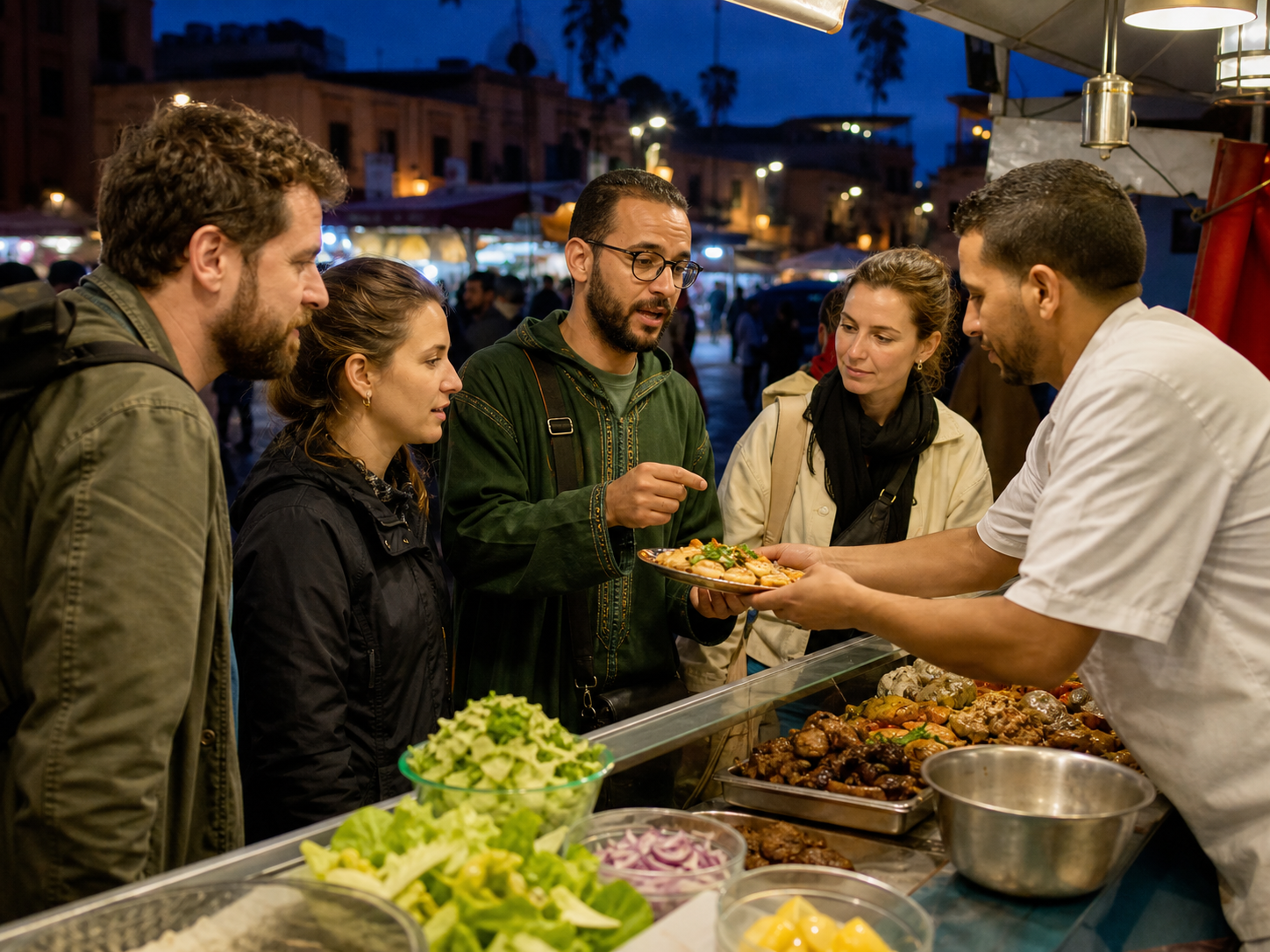
Tanjia marrakchia is not a tagine, though the two are often confused. The tanjia is a tall, amphora-shaped clay pot, and the dish is named after the vessel. Seasoned meat — traditionally lamb or beef — is placed in the pot with preserved lemon, garlic, cumin, saffron, olive oil and smen (aged, fermented butter). The urn is sealed with parchment paper tied with string, then carried to the neighbourhood hammam (public bathhouse) and buried in the still-hot ashes of the furnace that heats the bathwater. It cooks for six to eight hours in this residual heat, emerging with meat so tender it collapses at the touch of a fork.
Historically, tanjia is a bachelor's dish — it was prepared by men who did not have a woman to cook for them (the kitchen in traditional Moroccan culture is the woman's domain). Groups of men would pool money, prepare the urn together, leave it at the hammam in the morning and retrieve it at lunchtime for a communal meal. This social tradition still exists, though today restaurants and cooking classes have made tanjia accessible to everyone.
Finding tanjia at a restaurant requires asking specifically, because it must be ordered in advance — the hours-long cooking time means it cannot be prepared on demand. Some medina restaurants list it on the menu with a note that it requires pre-ordering. Others will prepare it if you call the morning of your dinner. A few specialist spots in the Mellah and around the souks keep tanjia cooking daily for the lunchtime trade. Your cooking-class instructor is the best source for a current recommendation.
When you eat tanjia, it arrives at the table still in the clay pot, sealed with its parchment. The pot is opened in front of you, releasing a concentrated rush of steam and aroma. The meat is pulled apart with bread — no cutlery needed — and the cooking juices, intensely flavoured from hours of reduction, are soaked up with khobz. It is one of the most elemental and satisfying meals in Moroccan cooking.
How to eat well
Order tanjia at least several hours in advance, or the morning before — it requires six to eight hours of slow cooking and cannot be made on demand.
Ask your cooking-class instructor for their tanjia recommendation; they will know which restaurants and vendors are cooking it that day.
Eat tanjia with your hands and plenty of bread — it is a communal, tactile dish that does not need cutlery.
Take a cooking class that includes tanjia to understand the preparation, then eat the hammam-cooked version at a restaurant for comparison.
For a guided tanjia experience including the hammam furnace visit, message us on WhatsApp at wa.me/212701664704.
Frequently asked questions
What is the difference between tanjia and tagine?
Tagine is cooked in a shallow, conical clay dish over low heat and is found across Morocco. Tanjia is a tall clay urn, specific to Marrakech, slow-cooked in hammam ashes for six to eight hours. The result is richer, softer and more concentrated.
Where is tanjia cooked in Marrakech?
Traditionally, in the ashes of a hammam (bathhouse) furnace. The dying embers provide a steady, gentle heat for hours. Some restaurants now use conventional ovens, but the hammam method is the authentic one.
Can I learn to make tanjia in a cooking class?
Yes. Several Marrakech cooking classes teach tanjia preparation — you season the urn and seal it with parchment. Some classes include a visit to a hammam furnace to see where the pot cooks.