By month
Cooking Classes in Marrakech in July
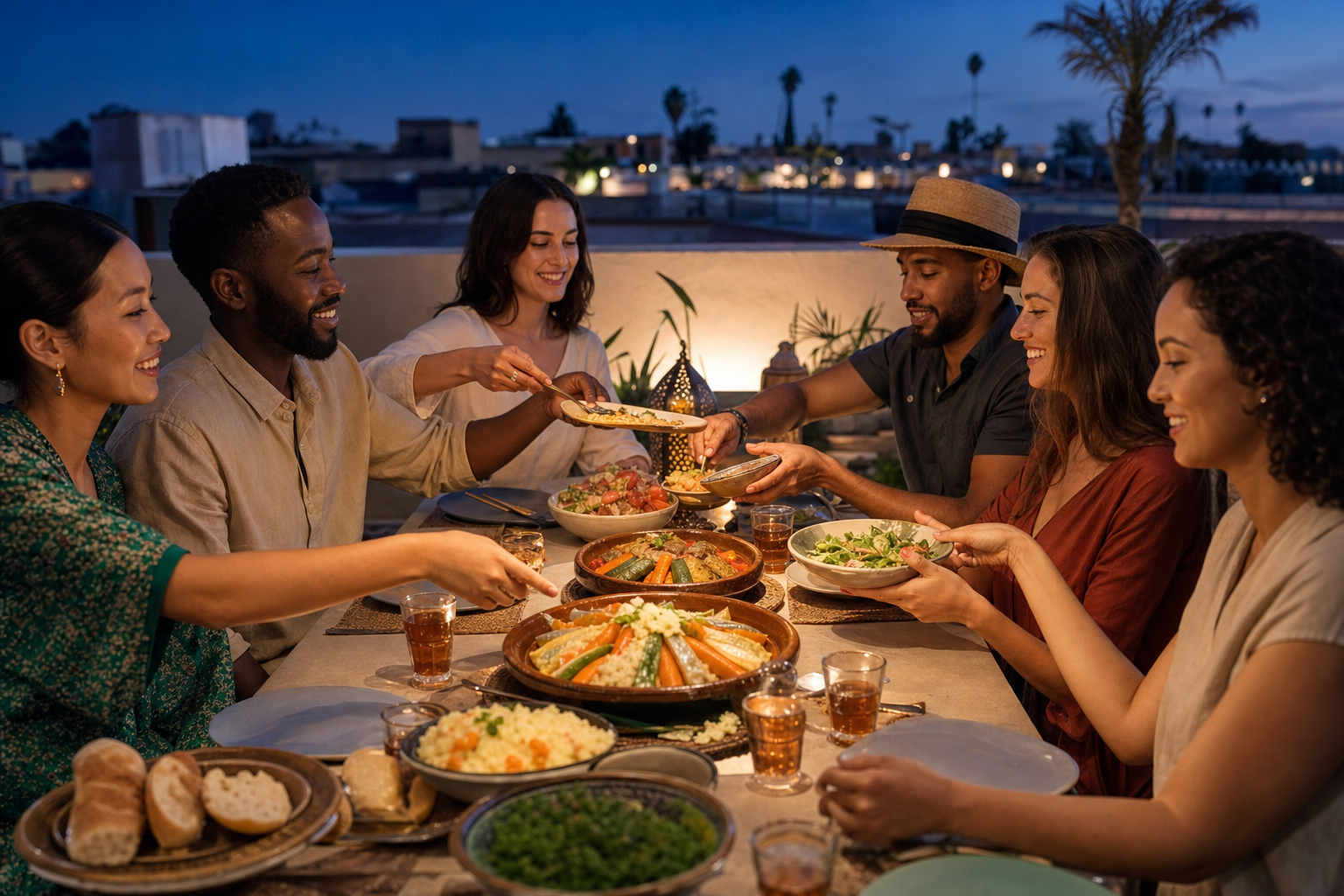
July is the hottest month in Marrakech — temperatures regularly pass 40 degrees — and the cooking adapts completely. The heavy tagines of winter are unthinkable; instead the kitchen turns to cold salads, fruit, grilled simplicity and a whole culture of cooling drinks. A July class teaches you how Moroccans actually eat in the fierce heat, and it is a side of the cuisine that cookbooks rarely cover.
- Read
- 7 min
- Season
- By month
- Updated
- 23 July 2026
At a glance
- July is the hottest month: classes teach cooling, refreshing Moroccan dishes.
- Cold salads, fruit desserts and almond-milk drinks are central.
- Melons, watermelons and stone fruit are at their best.
- Book morning or late-evening classes to avoid peak heat.
Cooking for the heat
In July, Moroccan cooks practise a form of seasonal wisdom that predates air conditioning: eat light, eat cool, and let the season's ripe fruit do the work. A July class reflects this, focusing on cold preparations — zaalouk and taktouka salads served at room temperature, raw chopped vegetable salads with lemon and cumin, and fruit-based desserts that need no oven. The almond-milk drink (sharbat) and fresh fruit juices are taught as essential skills, not afterthoughts.
The peak-summer market
July markets are a wall of colour: watermelons sliced open to show their red hearts, golden melons, baskets of peaches, apricots and plums, and the first prickly pears (cactus fruit) sold peeled from carts. Tomatoes are at their absolute peak, making this the best month for fresh tomato-based salads and sauces.
- Melons and watermelons: everywhere, eaten constantly to rehydrate.
- Peaches and apricots: ripe, fragrant and cheap.
- Prickly pears: the cactus fruit, a quintessential summer street snack.
- Tomatoes: at their peak for salads and sauces.
- Grilling ingredients: kefta, merguez and fresh vegetables for the charcoal.
When to take the class
In July, timing is everything. The best classes start early — 8 or 9 am — with a market visit in the relative cool, then cooking through the late morning. Evening classes that begin at 5 or 6 pm and run into a sunset dinner are even more popular. Many schools adjust their schedules seasonally, so check when booking.
For the drinks that keep Morocco cool, see our guide to Moroccan drinks, and for the wider summer table, summer eating in Morocco. Browse options on the cooking classes page.
Frequently asked questions
Can you take a cooking class in Marrakech in July?
Yes, but choose your timing. Morning classes starting at 8-9 am and evening classes from 5-6 pm avoid the worst heat. The food is at its lightest and freshest — cold salads, fruit desserts and cooling drinks — and the summer produce is magnificent.
What do Moroccans eat in July?
Light, cool food: cold salads, ripe fruit (melons, watermelon, peaches), grilled fish or meat, and a lot of cooling drinks — fresh juices, almond milk and mint tea. Heavy tagines are largely set aside until the heat breaks.
Is July too hot for Marrakech?
It is genuinely hot — regularly above 40 degrees — but manageable if you pace yourself, eat with the season, and do your activity in the morning and evening. The food is designed for exactly this heat, which makes a cooking class a practical lesson in beating it.