By month
Cooking Classes in Marrakech in January
January is the coldest month in Marrakech. Nights hover near freezing, the Atlas is deep in snow, and the kitchen answers with its most comforting repertoire: slow tagines, thick soups, warming spices and the peak of citrus season. A cooking class in January puts these winter dishes in your hands and teaches you why Moroccan cold-weather cooking is some of the best comfort food in the world.
- Read
- 7 min
- Season
- By month
- Updated
- 23 July 2026
At a glance
- January is peak winter: expect hearty tagines, warming soups and citrus at its best.
- Harira and bissara soups are staple lessons in January classes.
- Warming spices — ginger, cinnamon, black pepper and ras el hanout — take centre stage.
- Markets overflow with oranges, mandarins and winter root vegetables.
What the January kitchen looks like
In January the Marrakech kitchen is at its most warming and slow. The tagine, barely touched in the scorching summer months, is back in its element: lamb with prunes and almonds, beef with quince, chicken with preserved lemon and olives — the long, sweet-savoury braises that need a cold evening to feel right. Soups matter too: harira is eaten not just in Ramadan but as an everyday winter supper, and the thick fava-bean bissara, drizzled with olive oil and cumin, is the working breakfast of choice.
Citrus is at its glorious peak. Oranges and mandarins flood the markets, and a January class often works them into salads, desserts and fresh juice. The winter spice box leans heavily on ginger, cinnamon and ras el hanout, and a good class will walk you through the logic of warming spices.
What you will learn in a January class
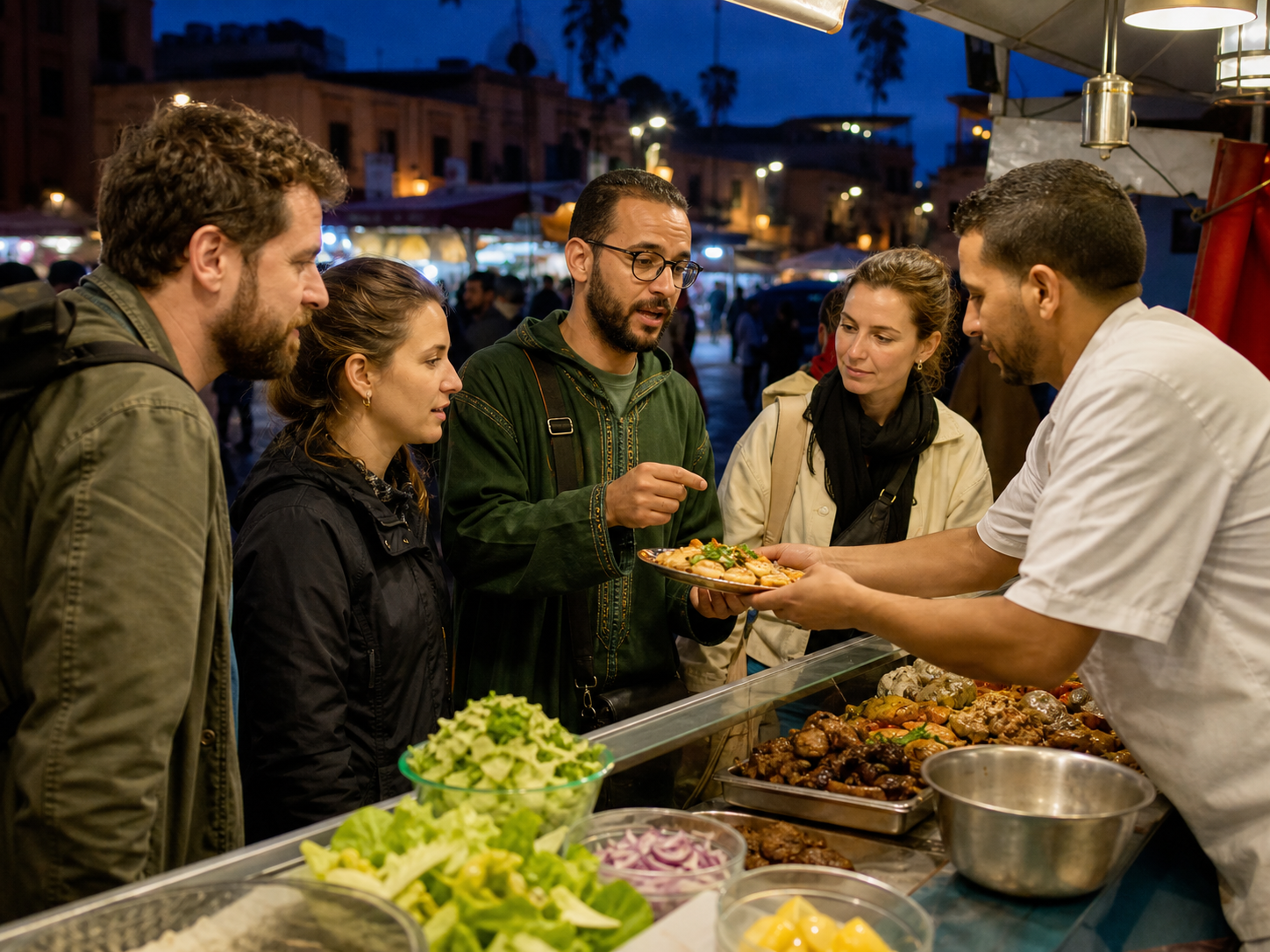
A typical January cooking class in Marrakech begins with a market visit — even in winter the souks are vibrant, piled with root vegetables, dried pulses, citrus and the warming spice blends that define the season. Back in the kitchen, you will likely cook two or three dishes drawn from the winter repertoire.
- Lamb tagine with prunes and almonds: the quintessential sweet-savoury winter dish, slow-braised with cinnamon and honey.
- Harira soup: the tomato, lentil and chickpea soup that warms every Moroccan winter evening.
- Bissara: the thick fava-bean puree finished with olive oil and cumin — a cold-morning staple.
- Orange and cinnamon salad: a simple dessert using peak-season citrus.
- Mint tea: the warming ritual that closes every class and every Moroccan meal.
Why January is a good time to visit
January is low season for tourism, which means smaller class sizes, easier access to the souks and lower accommodation costs. The weather is cool and clear by day — comfortable for walking the Medina — and cold by evening, which is exactly when the food is at its most satisfying. You will eat the way Moroccans actually eat in winter, not the lighter summer menu that high-season visitors often encounter.
For what to eat beyond the classroom, see our guide to winter eating in Morocco, and for the soups in depth, winter warming Moroccan soups. Browse available experiences on our cooking classes page.
Frequently asked questions
Is January a good month for a cooking class in Marrakech?
Yes. January is low season so classes are smaller and the city quieter. The food is at its most comforting — hearty tagines, warming soups and peak-season citrus — and you learn genuine winter dishes that Moroccans actually cook in the cold months.
What dishes will I learn in a January cooking class?
Expect winter dishes: lamb tagine with prunes, harira soup, possibly bissara fava-bean puree, an orange dessert using peak citrus, and mint tea. Many classes also teach the warming spice blends that define cold-weather Moroccan cooking.
Is it cold in Marrakech in January?
Days are mild and sunny, around 18 degrees, but nights drop close to freezing. Most riads have heating, and the cold evenings make the slow, warming food feel perfect. Bring a warm layer for evening walks.