Where to eat · Marrakech food guide
Where to Eat in the Mellah: Jewish Quarter Dining Guide
The Mellah — Marrakech's historic Jewish quarter — is the medina's best-kept food secret. The spice market is cheaper and better stocked than the tourist souks, the tagine shops serve the most honest meals in the city, and the whole quarter has a lived-in authenticity that the tourist-facing medina often lacks.
- Zone
- South-east medina
- Known for
- Spice market, budget tagines, bakeries
- Price level
- Very cheap — 20–50 MAD per meal
- Atmosphere
- Authentic, working-class, unhurried
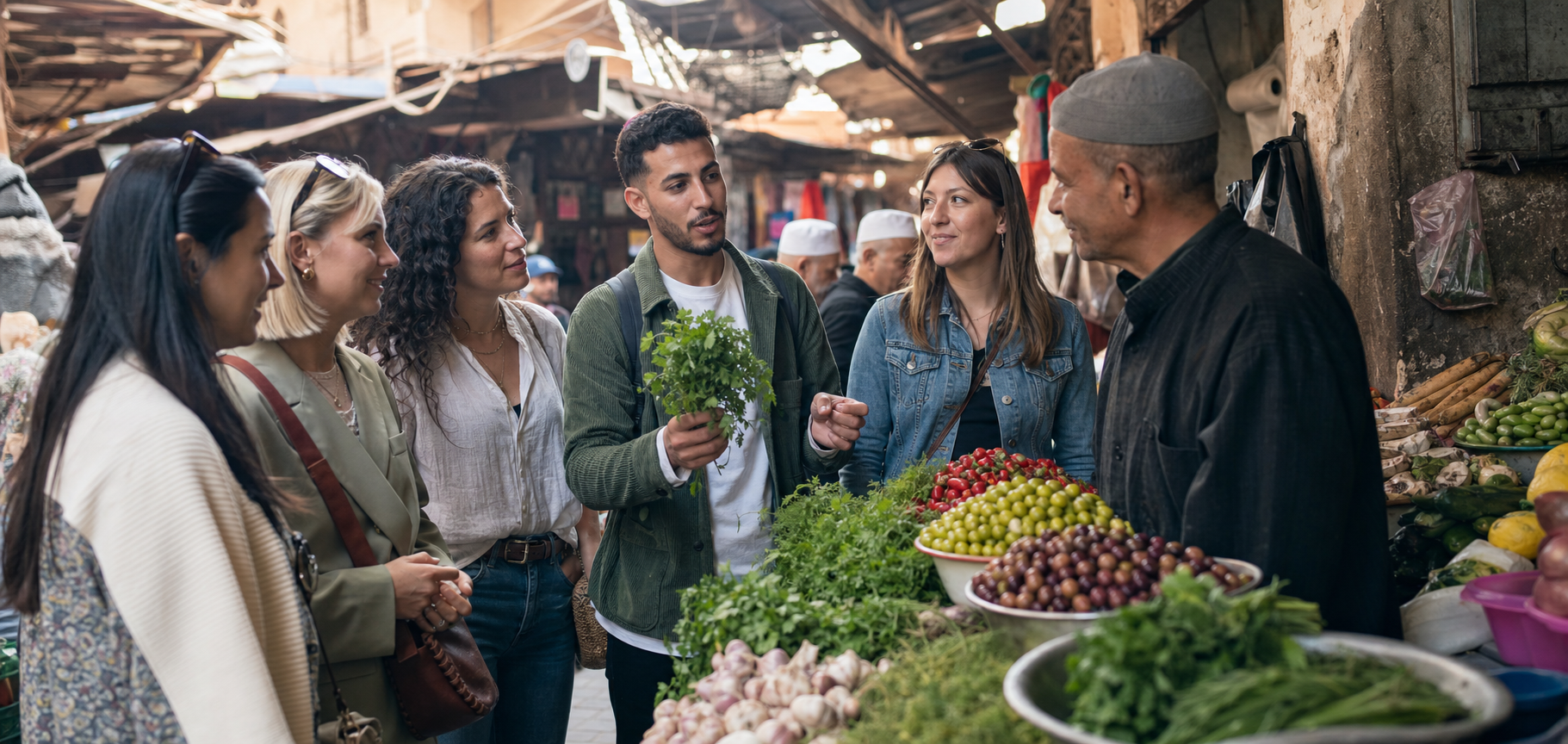
Eating in the Mellah
The Mellah's covered spice market is where Marrakech's professional cooks actually shop — the prices are fixed (no haggling), the quality is high, and the range is broader than the tourist souks. You can buy better saffron here for a third of the Rahba Kedima price.
The eating is similarly honest. Tiny tagine shops serve lunch to locals for 25–30 MAD — the same chicken tagine with preserved lemon that costs 120 MAD in a riad restaurant. The quality is at least as good, possibly better, because these cooks make the same dishes every day for the most demanding audience: their neighbours.
What to eat in the Mellah
- Budget tagine lunch
- Chicken, kefta or fish tagines for 25–35 MAD. Point at the bubbling pot and sit down.
- Moroccan doughnuts (sfenj)
- Fried to order in the morning. 1 MAD each. Impossibly good.
- Mellah spice-market snacks
- Dried fruits, roasted nuts and spiced olives — snack while you shop.
- Bakery bread
- The neighbourhood bakeries (ferranes) produce beautiful round khobz — buy a loaf hot from the oven.
Markets & souks nearby
Cooking classes & food tours here
Local tips for eating in Where to Eat in the Mellah
Visit the spice market in the morning when the stalls are freshly stocked.
The tagine shops are busiest at lunch (12–2pm) — arrive at noon for the best selection.
The Bahia Palace and El Badi Palace are a short walk away — combine food with sightseeing.
Frequently asked questions
Is the Mellah still a Jewish quarter?
Historically yes — it was the Jewish quarter from the 16th century. Today, only a handful of Jewish families remain. The area is now predominantly Muslim but retains its historical architecture and the Lazama Synagogue is open to visitors.