Themed food days
Experiencing Ramadan Food in Marrakech
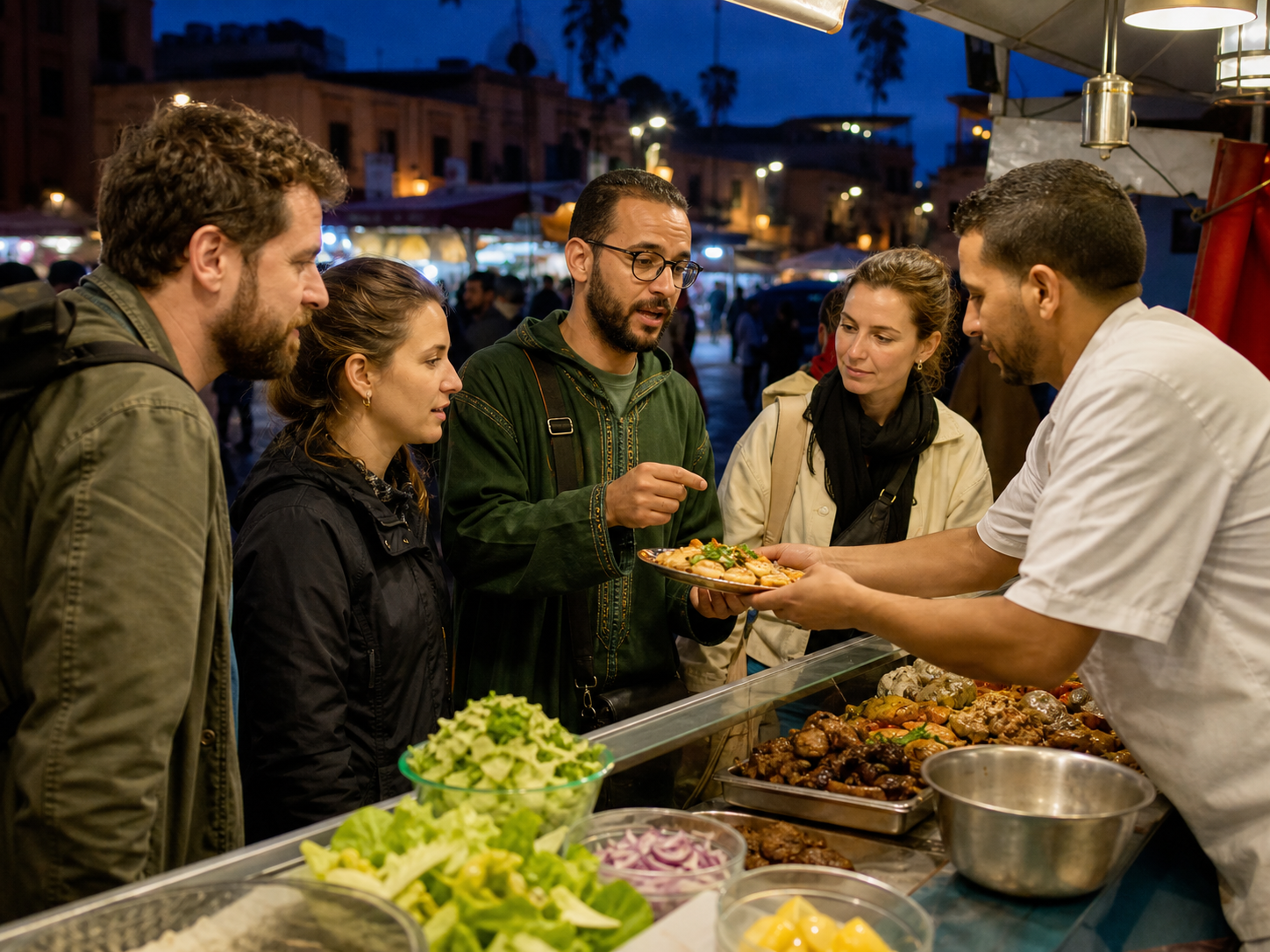
Visiting Marrakech during Ramadan is a unique food experience. Daytime eating is quiet and respectful — but at sunset, the city erupts into an extraordinary food ritual. Iftar (the meal that breaks the fast) is harira, dates, chebbakia, eggs and fresh juice — served simultaneously across every household, restaurant and street stall in the city.
- Ramadan dates
- Varies yearly (check Islamic calendar)
- Iftar time
- Sunset — varies from ~6:30pm to ~7:30pm
- Key foods
- Harira, dates, chebbakia, msemen, boiled eggs, fresh juice
- Visitor tip
- Eat discreetly during daytime out of respect
Before you start
This itinerary covers one evening during Ramadan — from the quiet anticipation before sunset to the festive eating that follows. Non-Muslim visitors are welcome to eat at iftar and should not fast themselves unless they choose to.
The plan, in order
2 stops, timed morning to night — follow it top to bottom.
Practical tips
- Do not eat, drink or smoke in public during daylight hours — this is a sign of respect, not a legal requirement for visitors
- Many restaurants close during the day but open for iftar — book ahead
- Riads often serve a special Ramadan iftar experience — ask when booking
- The atmosphere during Ramadan is festive, not solemn — embrace it
Frequently asked questions
Should tourists visit Marrakech during Ramadan?
Yes — it is one of the most culturally rich times to visit. Daytime eating options are limited but not impossible (tourist-facing restaurants and hotel restaurants usually stay open). The iftar experience is extraordinary and worth planning a visit around.
Can non-Muslims eat at iftar?
Absolutely — you are welcome at any iftar table. Moroccans are generous during Ramadan and may invite you to share their meal. Accept without hesitation.
Make it happen
Ready to turn the plan into a trip? Book the hands-on parts, find a food tour to fill an afternoon, or read up before you go.