Half-day tours
Marrakech Spice Souk Tour: What to Buy and How to Bargain
Marrakech's spice souks are sensory overload — pyramids of coloured powders, burlap sacks of dried herbs, barrels of preserved lemons and olives. This self-guided tour teaches you what to look for, what is worth buying, and how to negotiate a fair price.
- Duration
- 2-3 hours
- Best time
- Morning (9-11am)
- Budget
- 100-300 MAD for spices
- Location
- Medina, near Jemaa el-Fna
Before you start
This itinerary takes you through the main spice-selling areas of the Medina, teaches you what to look for in quality spices, covers fair prices for the essentials, and gives you practical bargaining techniques that work.
The plan, in order
4 stops, timed morning to night — follow it top to bottom.
Phase 1
9:00 – 9:30
Orientation and the first souk
-
Enter the souk from Jemaa el-Fna
Enter the souk from the north side of Jemaa el-Fna. The first section has the most tourist traffic and the highest prices. Walk through without buying — this is your orientation phase. Note the displays, smell the spices, observe how vendors interact with local buyers versus tourists. Prices here are often 3-5x what you will pay deeper in.
Phase 2
9:30 – 10:30
Deep souk — where locals buy
-
Find the local spice vendors
Push deeper into the souk, past the tourist-facing stalls, until you find vendors with local customers. These stalls are less colourful and less theatrical, but the quality is higher and the prices are fair. Look for vendors weighing spices on scales for Moroccan women — that is your quality signal.
Tip: The spice souk extends well beyond the main tourist drag. Explore side alleys for smaller, family-run stalls with better prices. -
The essential buys
The must-buy spices from Marrakech: ras el hanout (the signature blend — should smell complex, not like one dominant spice), cumin (toasted, whole seeds), saffron (real saffron is expensive — 15-30 MAD per gram), paprika, and dried rose petals. Argan oil and amlou are also best bought in the souk or from cooperatives.
Phase 3
10:30 – 11:00
Olives, preserved lemons and dried herbs
-
The olive and preserves section
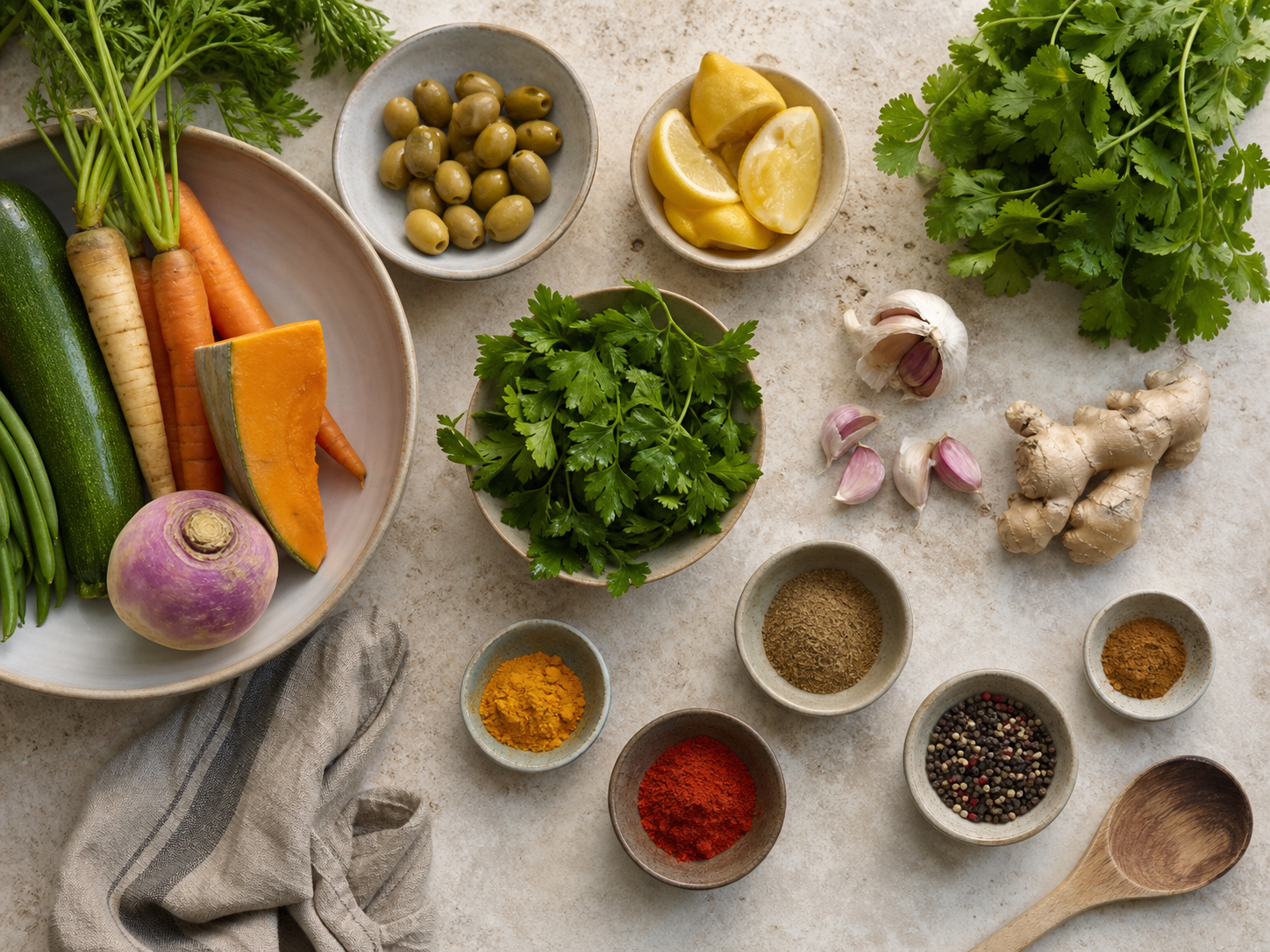
Adjacent to the spice souk, you will find vendors selling olives (dozens of varieties — taste before buying), preserved lemons (essential for tagine cooking at home), dried herbs (verbena, chamomile) and pickled vegetables. These items are heavy but pack well and make excellent gifts.
Practical tips
- Start your bargaining at about half the first price offered
- Buy saffron in threads, never powder — powder is often adulterated
- Ras el hanout varies hugely — smell it before buying
- Ask for a small taste or smell before committing to buy
Frequently asked questions
How much should ras el hanout cost?
In the deep souk, 30-60 MAD per 100g is a fair price. Tourist-facing stalls may charge 100-200 MAD for the same quantity.
Is the saffron real?
Real saffron is sold in threads and is expensive (15-30 MAD per gram). If it is cheap and powdered, it is probably safflower or turmeric. Buy threads and crumble them yourself.
Make it happen
Ready to turn the plan into a trip? Book the hands-on parts, find a food tour to fill an afternoon, or read up before you go.