Themed food days
Marrakech Spice Market Walk: A Half-Day Sensory Tour
The spice souk is the aromatic heart of the Marrakech medina — a labyrinth of narrow passages lined with pyramids of cumin, turmeric, paprika, saffron threads in glass cases, barrels of dried rose petals, and sacks of mysterious blends. This half-day walk guides you through the souk systematically, with tasting stops and shopping advice so you leave with spices worth carrying home.
- Duration
- 3–4 hours
- Pace
- Slow, with tasting stops
- Best for
- Food lovers, home cooks
- Budget
- 100–400 MAD (shopping dependent)
- Walking
- ~2 km
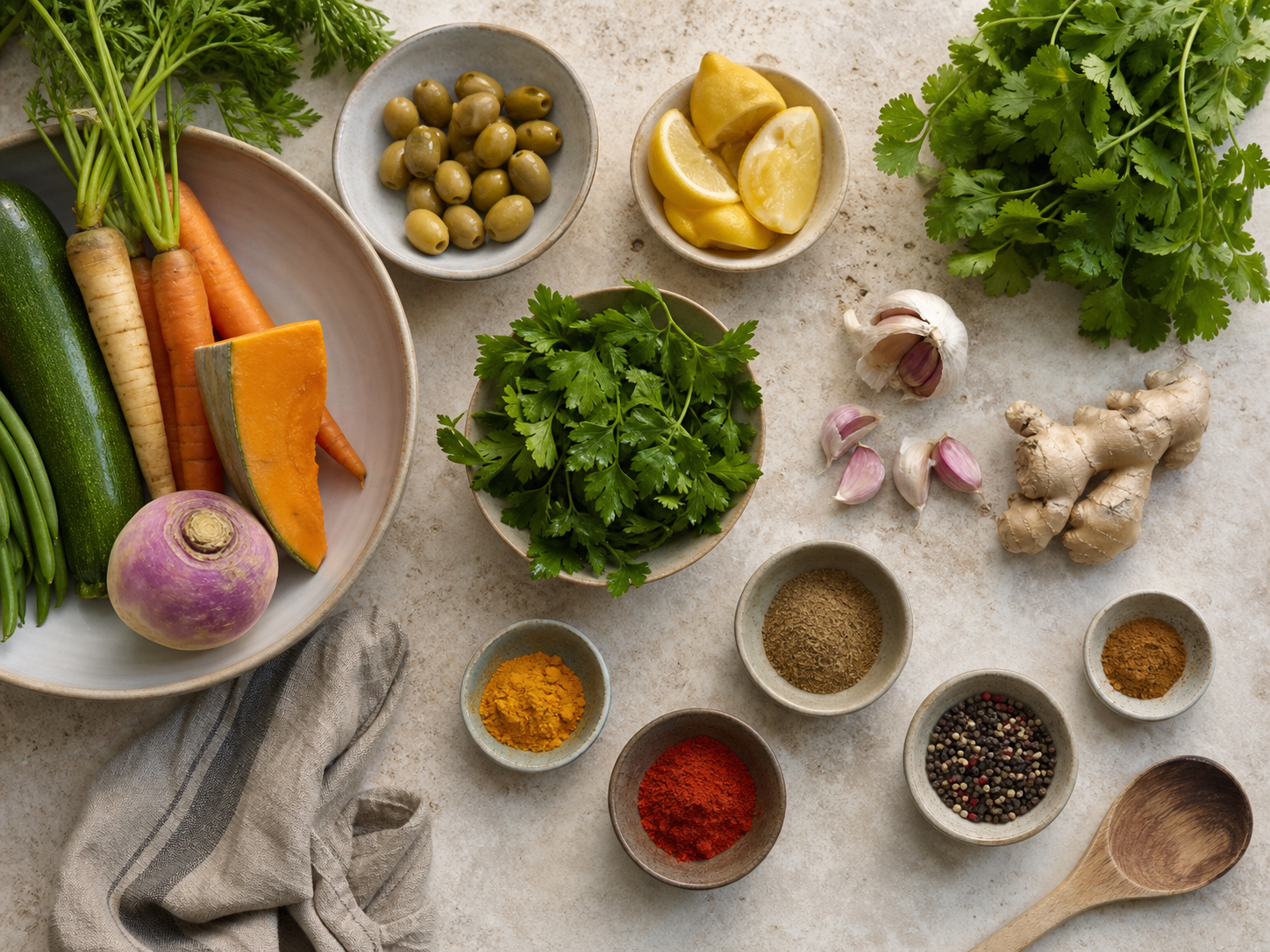
Before you start
Marrakech's spice souk is concentrated in the northern medina, between the Rahba Kedima (old grain square) and the Souk des Teinturiers (dyers' souk). The best spice shops are in the narrow alleys connecting these landmarks. This walk takes you through the souk in a logical order — starting with orientation at the Rahba Kedima, moving through the specialist spice passages, and ending with a practical cooking demonstration using what you have bought.
Shopping tip: prices are negotiable but not by as much as you think. A fair price for ras el hanout is 30-60 MAD per 100g. Saffron ranges enormously — real saffron costs 15-30 MAD per gram (safflower dyed to look like saffron costs 2-5 MAD per gram — learn to tell the difference before you buy). Buy whole spices over ground where possible: they last longer and are harder to adulterate.
The plan, in order
6 stops, timed morning to night — follow it top to bottom.
Morning
9:00am – 11:00am
Orientation, spice souk exploration, and the saffron test.
-
Rahba Kedima — the old square
Start at the Rahba Kedima (also called Place des Épices), the open square where the spice trade has centred for centuries. Get your bearings: notice the apothecary stalls selling traditional remedies (kohl, ghassoul clay, argan oil), the dried chameleons and hedgehog skins (traditional medicine, not food), and the spice pyramids. Walk around the square before committing to any shop — the variety and prices will calibrate your expectations.
Tip: The terraces above the square (Café des Épices, Nomad) offer good views. Save them for a tea break later. -
The spice passages
Enter the narrow alleys south of Rahba Kedima. The serious spice merchants are in these passages — look for shops with large sacks of whole spices rather than pre-packaged tourist jars. Ask to smell: cumin (kamoun), coriander (kisbor), paprika (felfel hlouwa), turmeric (kherkoum). A good merchant will let you taste ground spices on your fingertip. Buy whole cumin seeds (10-15 MAD per 100g), whole coriander (10-15 MAD), and sweet paprika (15-20 MAD) — these are the foundation spices of Moroccan cooking.
About Moroccan cumin -
The saffron test
Find a saffron vendor (there are several in the spice passages). Real saffron (from Taliouine, Morocco's saffron capital) has deep red threads with an orange tip, a distinctive honey-metallic smell, and dyes water yellow slowly. Fake saffron (dyed safflower or corn silk) dyes water red immediately, smells like nothing, and dissolves. Ask to see both side by side — any honest vendor will show you. Buy 1-2 grams of real saffron (15-30 MAD per gram) — enough for months of cooking.
About Moroccan saffron
Late morning
11:00am – 12:30pm
Ras el hanout, preserved lemons, olives, and a rooftop tea.
-
Ras el hanout blending
Ras el hanout ('head of the shop') is Morocco's master spice blend — each merchant has their own recipe, typically containing 12-30 spices including cardamom, cinnamon, nutmeg, allspice, turmeric, ginger, lavender, rose petals, and black pepper. The best merchants blend to order. Ask to taste different blends — they range from sweet-floral to earthy-peppery. A good blend has depth and complexity; a bad one tastes like generic curry powder. Buy 100-200g of your favourite (30-60 MAD per 100g).
About ras el hanout -
Olive and preserved lemon stalls
Exit the spice passages toward the olive stalls — barrels of green, black, cracked, and spiced olives in every shade. Taste freely (vendors expect it). Look for the small, wrinkled, salt-cured black olives — intensely flavoured and perfect with bread. Then find the preserved lemon jars: whole lemons packed in salt and their own juice, soft and golden. Buy a small jar (15-25 MAD) — they keep for months and are essential for authentic tagines at home.
-
Rooftop tea and spice inventory
Climb to one of the rooftop terraces overlooking the souk — Café des Épices or a neighbouring terrace. Order mint tea (10-15 MAD) and spread your purchases on the table. This is your moment to review: do you have your foundation spices (cumin, coriander, paprika), your star ingredient (saffron), your signature blend (ras el hanout), and your preserves (preserved lemons, olives)? If anything is missing, you are five minutes from the stalls below.
Practical tips
- Buy whole spices over ground — they last 6-12 months versus 3-4 months for ground.
- Pack spices in your checked luggage, sealed in zip-lock bags. They are allowed through customs in most countries.
- Avoid the first shop that approaches you aggressively — the best merchants let their product speak.
- Ask prices per 100g, not per scoop — 'scoops' are inconsistent and lead to overcharging.
Make it your own
Add a cooking class
Several riads offer afternoon cooking classes where you use your fresh spices. Book in advance and bring your ras el hanout to compare with theirs.
Extend to the dyers' souk
Continue north to the Souk des Teinturiers where natural dyes (henna, indigo, saffron) are sold — same spices used for different purposes. Fascinating but not essential for cooks.
Frequently asked questions
Will I get ripped off?
Prices are higher in the main tourist passages than in the back streets, but rarely by more than 30-50%. The key is to know benchmark prices: cumin 10-15 MAD/100g, ras el hanout 30-60 MAD/100g, saffron 15-30 MAD/g. Ask the price before purchasing, and walk away if it seems high — the next stall is three metres away.
Can I bring spices home on the plane?
Yes — dried spices are permitted in both carry-on and checked luggage by almost all airlines and customs authorities. Sealed, labelled bags are less likely to attract attention at security. Avoid carrying unmarked powders in carry-on as they may require additional screening.
Make it happen
Ready to turn the plan into a trip? Book the hands-on parts, find a food tour to fill an afternoon, or read up before you go.