City food tours
Marrakech Pastry and Sweets Tour
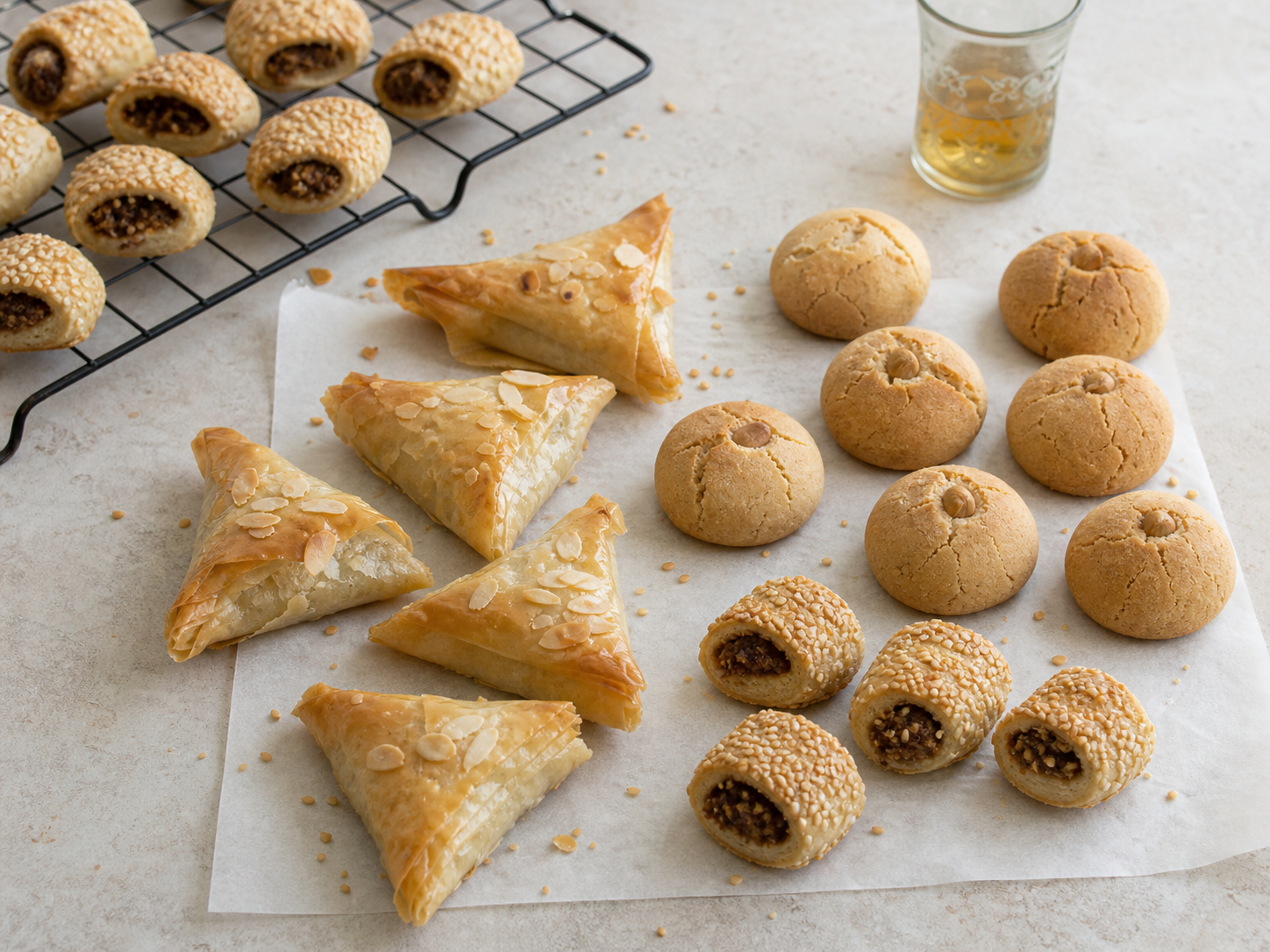
Marrakech is a pastry city — every neighbourhood has at least one pastry shop selling cornes de gazelle, ghriba, chebakia and dozens of other intricate sweets. This half-day walking tour takes you through the best pastry shops and bakeries in the Medina.
- Duration
- 3–4 hours
- Budget
- 100–250 MAD
- Distance
- ~2 km walking
- Best time
- Morning (freshest pastries)
Before you start
Start near the spice souk, weave through the Medina's pastry and bakery district, taste your way through the major pastry families, and finish with mint tea and a mixed pastry box. You will learn to distinguish quality and know what to buy as souvenirs.
The plan, in order
5 stops, timed morning to night — follow it top to bottom.
Stop 1
09:00 – 09:30
Fresh bread bakery
-
Neighbourhood ferran (bakery)
Start the morning at a traditional ferran — the community bakery where families bring their bread dough to be baked. Watch the baker slide loaves into the wood-fired oven with a long paddle. Buy a warm khobz (2-3 MAD) and eat it plain — fresh, hot bread needs nothing else.
Tip: Look for frranes by their distinctive smell — hot bread and wood smoke — and the queues of women carrying dough on boards.
Stop 2
09:45 – 10:15
Cornes de gazelle specialist
-
Specialist pastry shop
Find a pastry shop known for its cornes de gazelle — crescent-shaped almond paste pastries with paper-thin shells. The best ones should be so delicate that the shell cracks at a touch, revealing the fragrant almond filling inside. Quality varies enormously between shops — taste before buying by the kilo.
About cornes de gazelle
Stop 3
10:30 – 11:00
Ghriba and fekkas
-
Cookie and biscuit shop
Moroccan bakeries sell ghriba (crackle-topped cookies) in many flavours: almond, sesame, coconut and semolina. Also try fekkas — twice-baked almond biscuits that are Morocco's biscotti. These are the everyday sweets that Moroccans eat with afternoon tea. Buy a mixed bag — 50 MAD per kilo.
Stop 4
11:15 – 11:45
Chebakia and honey pastries
-
Chebakia specialist
Some shops specialise in chebakia — the honey-dipped, sesame-coated flower pastries that define Ramadan eating. Outside Ramadan, they are still available but in smaller quantities. Try m'kharqa (a simpler fried-and-honeyed pastry) if chebakia is not available. The honey glaze should be golden and the sesame should be toasted.
What is chebakia?
Stop 5
12:00 – 12:30
Tea and mixed pastry box
-
Café with pastry platter
End at a café or riad that serves a mixed pastry platter (tashkila) with mint tea. The tashkila typically includes a selection of everything you have tasted: cornes de gazelle, ghriba, briouats, chebakia and m'hanncha. Sit, rest, drink tea and review your favourites before buying a box to take home.
Practical tips
- Buy pastries by the kilo, not individually — it is cheaper and lets you mix varieties.
- Pastries bought in the morning are freshest; by late afternoon, quality drops.
- Cornes de gazelle and fekkas travel well as souvenirs; chebakia and honey pastries do not — they are sticky.
Frequently asked questions
How much do Moroccan pastries cost?
150-400 MAD per kilo depending on the type. Cornes de gazelle and chebakia are the most expensive; ghriba and fekkas are the cheapest. Airport shops charge 2-3x more.
Can I ship pastries home?
Dry pastries (fekkas, ghriba) ship well. Honey-glazed pastries (chebakia) do not — they stick together and spoil faster. Vacuum-sealed pastry boxes from specialist shops are the best option for transport.
Make it happen
Ready to turn the plan into a trip? Book the hands-on parts, find a food tour to fill an afternoon, or read up before you go.