Food culture
What Moroccans Eat During Ramadan: The Complete Guide
Ramadan transforms Moroccan food culture. The daily fast (sunrise to sunset) is broken each evening with an elaborate iftar spread that is the most food-intensive meal in the Moroccan calendar. Every family has its Ramadan table traditions. This guide covers what is eaten, when, and why — whether you are fasting yourself or visiting Morocco during Ramadan.
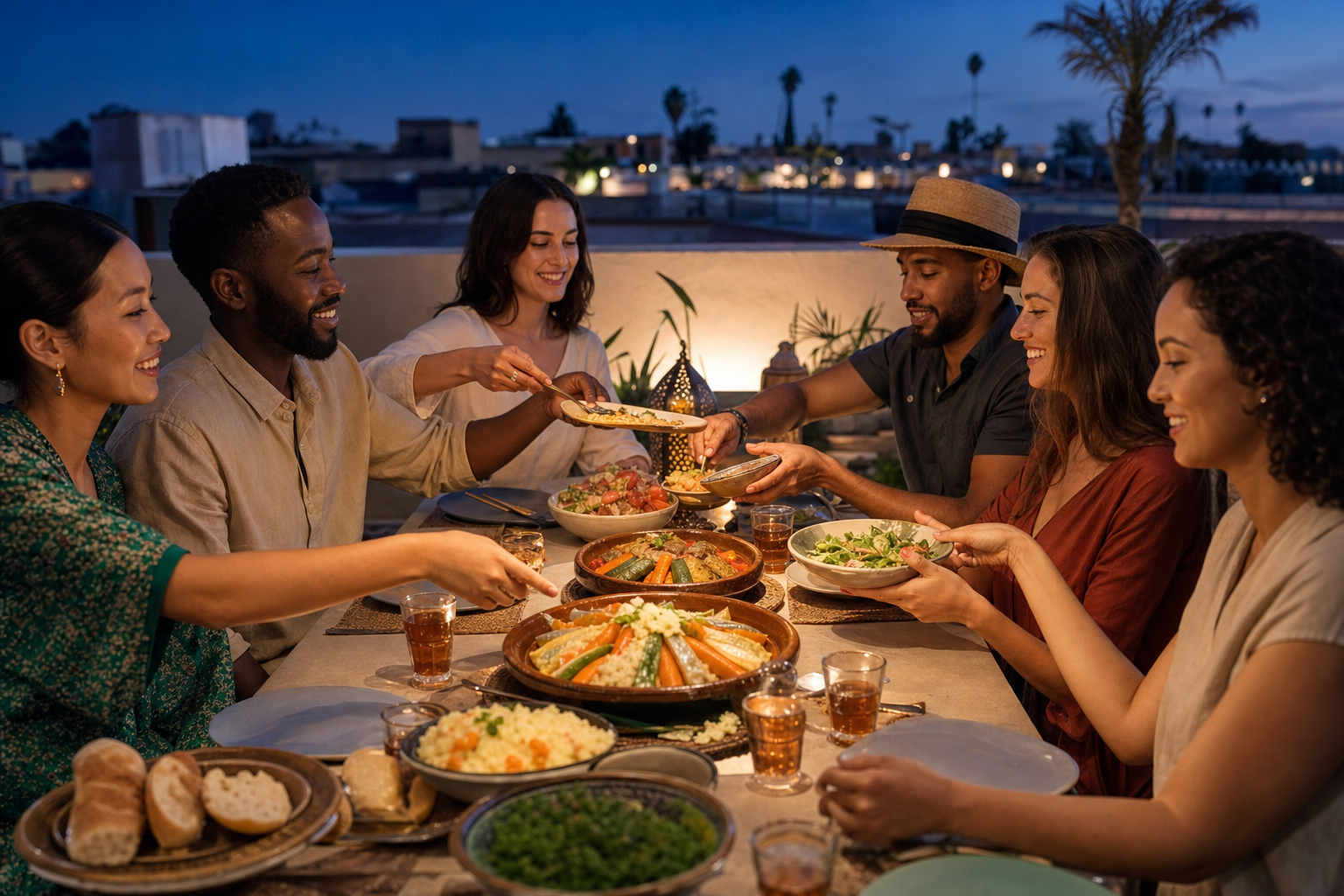
The iftar spread
The fast-breaking meal (iftar or ftour in Moroccan dialect) follows the call to prayer at sunset. Every Moroccan table includes: dates (the Prophetic tradition for breaking the fast), harira soup (the centrepiece — a thick tomato, lentil and chickpea soup), hard-boiled eggs with cumin salt, chebakia (honey-sesame pastry), briouates (fried pastry parcels filled with cheese, kefta or chicken), msemen or harcha with honey and butter, orange juice or milk with dates, and mint tea. This spread is repeated every night for 30 nights.
Harira: the Ramadan soup
Harira is eaten year-round but reaches its peak during Ramadan. Every family has their recipe — the base is tomatoes, lentils, chickpeas, onions and celery, thickened with flour or broken vermicelli, enriched with fresh herbs (coriander and parsley). Some add lamb or beef. It is the first substantial food after a day of fasting and is almost sacred in its importance. No Moroccan Ramadan is complete without harira.
Chebakia: the Ramadan pastry
Chebakia is so closely associated with Ramadan that it is essentially a seasonal food. These flower-shaped fried dough pastries are coated in honey and sprinkled with sesame seeds. Families make them by the dozen in the weeks before Ramadan. The aroma of frying chebakia is the smell of Ramadan in Morocco. They are served at iftar alongside harira — the savoury and the sweet together.
Suhoor: the pre-dawn meal
Suhoor (or s'hour) is the meal eaten before dawn, before the fast begins. It is lighter: bread with olive oil and honey, msemen, leftover harira, dates, yoghurt or raib (fermented milk), sellou (the energy-dense roasted flour confection), and plenty of water. The goal is sustained energy throughout the day. Many families also drink coffee or tea at suhoor.
Visiting Morocco during Ramadan
Tourists are not expected to fast, but eating and drinking in public during fasting hours is considered disrespectful. Most restaurants in tourist areas remain open for visitors. The evening iftar experience is magical — many restaurants offer special Ramadan menus, and the streets come alive after sunset. If you can, join a local family for iftar — it is one of the most generous and memorable food experiences in Morocco.
Frequently asked questions
Can tourists eat during Ramadan?
Yes — eat in your riad, hotel, or in tourist-area restaurants that stay open. Avoid eating, drinking or smoking in public streets during fasting hours out of respect. After sunset, you can eat anywhere — and the food is often the best of the year.
When is Ramadan?
Ramadan follows the Islamic lunar calendar, so it moves 10-11 days earlier each year. Check the dates before planning a trip. Ramadan in Morocco is a beautiful and food-rich experience, not a reason to avoid visiting.