Travel tips
Food Safety in Morocco: A Practical Guide
Most visitors to Morocco eat widely without any problems. But a few practical precautions make the difference between a trip remembered for incredible food and one remembered for a bad stomach. This guide covers what matters and what does not.
Water
Do not drink tap water in Morocco. Buy bottled water (Sidi Ali and Sidi Harazem are the most common brands). Most restaurants serve bottled water by default. Use bottled water for brushing your teeth in the first few days until your stomach adjusts.
Ice in tourist restaurants is generally made from filtered water and is safe. At street stalls, avoid ice in drinks as a precaution.
Street food safety
Moroccan street food is generally safe if you follow one rule: eat where locals eat. A busy stall with high turnover means fresh food. An empty stall means food that has been sitting. The Jemaa el-Fna food stalls are inspected and the competition keeps standards reasonable.
Look for food that is cooked to order in front of you (grilled meat, fried fish, fresh msemen). Avoid pre-cooked food that has been sitting at room temperature for unknown periods.
Raw salads and fruit
Cooked salads (zaalouk, taktouka) are safe because they are cooked. Raw salads in restaurants are generally fine — restaurants wash produce. At street stalls, be slightly more cautious with raw vegetables.
Fruit you peel yourself (oranges, bananas) is always safe. Morocco's fresh-squeezed orange juice is iconic and safe — it is made from freshly squeezed fruit in front of you.
If your stomach does rebel
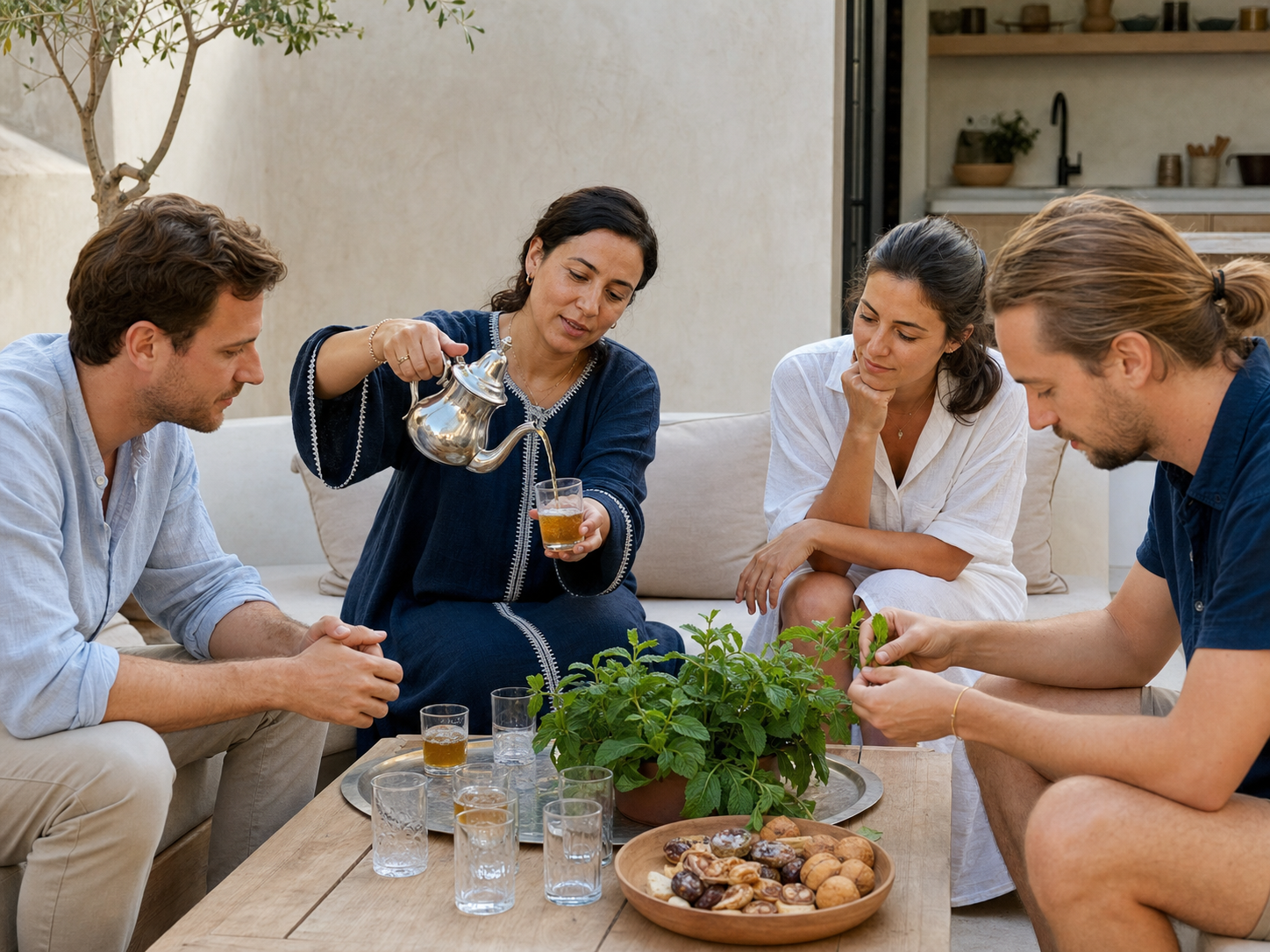
Minor stomach adjustment is common when encountering any new cuisine and spices. It usually passes within a day. Stay hydrated, eat plain bread, and drink mint tea (which settles the stomach).
Pharmacies in Morocco are well-stocked and pharmacists are knowledgeable. Describe your symptoms and they will recommend appropriate treatment without needing a prescription for most common remedies.
Frequently asked questions
Is Moroccan street food safe?
Generally yes — especially at busy stalls with high turnover. Moroccan street food is cooked fresh and served hot, which reduces risk. Apply common sense: eat where locals eat.
Should I avoid the Jemaa el-Fna food stalls?
No — they are a major food experience and are regularly inspected. Choose busy stalls, eat food cooked fresh in front of you, and stick to bottled water.