Comparison · Cuisines compared
Moroccan vs Persian Food
Moroccan and Persian cuisines share more ingredients than any other two Islamic food traditions — saffron, rose water, dried fruit, nuts, preserved lemons, slow-cooked stews. But the way those ingredients are assembled produces two fundamentally different eating experiences.
- Read
- 6 min
- Comparing
- Moroccan vs Persian
- Updated
- 20 July 2026
The short answer
In one paragraph
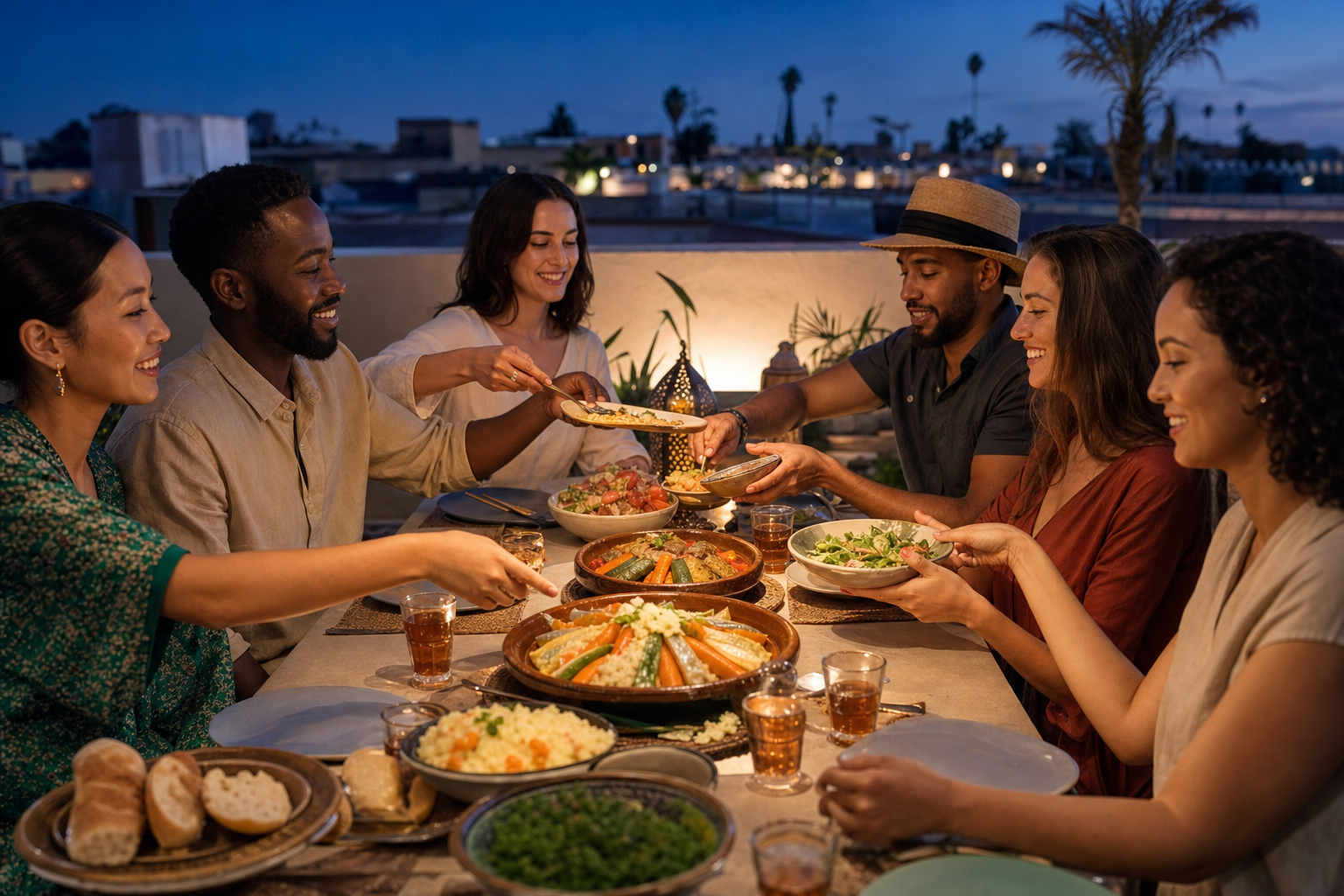
Both cuisines use saffron, dried fruit and slow-cooked stews, but Moroccan food is couscous-based with heavy cumin-coriander-cinnamon spicing, while Persian food is rice-based with more delicate herb-and-sour flavours (sumac, dried limes, fresh herbs). Moroccan cooking favours the tagine pot; Persian cooking favours elaborate rice dishes (tahdig, polo).
The key difference: Moroccan food pairs with couscous and is spice-forward; Persian food pairs with rice and is herb-and-sour-forward.
Side by side
At a glance
A side-by-side of the differences that matter.
| Aspect | Moroccan | Persian |
|---|---|---|
| Staple starch | Couscous, bread | Rice (polo, chelow) |
| Signature dish | Tagine (clay pot stew) | Khoresh (stew) served over rice |
| Saffron use | In tagines, couscous broth | In rice, stews, ice cream |
| Sour element | Preserved lemon | Dried lime, sumac, pomegranate |
| Herbs | Coriander, parsley (cooked) | Vast herb platters eaten raw (sabzi) |
| Sweet-savoury | Common — dates, prunes in tagines | Common — barberries, sour cherry in rice |
| Heat level | Mild | Mild |
You will prefer Moroccan food if
You like heavier spice blends (cumin, cinnamon, ginger).
You prefer couscous and bread to rice.
You enjoy the earthy, slow-cooked quality of tagine cooking.
You will prefer Persian food if
You love rice dishes — tahdig (crispy rice) is addictive.
You prefer fresh herbs and sour flavours to heavy spicing.
You enjoy more delicate, nuanced flavour profiles.
The bottom line
These are two of the world's most sophisticated food traditions. Moroccan food is warmer and spicier; Persian food is more delicate and herbal. If you love one, you will almost certainly appreciate the other — the shared use of saffron, rose water and dried fruit creates a family resemblance beneath the differences.
Frequently asked questions
Which cuisine uses more saffron?
Both are among the world's heaviest saffron users. Iran is the world's largest saffron producer; Morocco is the largest African producer. Both cuisines use it liberally in rice/couscous, stews and desserts.
Are there Persian-Moroccan fusion restaurants?
A few exist in London, Paris and Dubai, but the fusion is rare. The flavour profiles are different enough that combining them requires careful calibration to avoid muddy flavours.