Food culture
Regional Cuisine Differences Across Morocco
Morocco is not one cuisine but many. A tagine in Marrakech tastes nothing like a tagine in Fez, and both are worlds apart from what you eat in the Rif mountains or the Sahara. Geography, climate, history and local ingredients create distinct regional food identities. Understanding these differences transforms how you eat your way through Morocco.
Fez: the refined kitchen
Fez is considered the culinary capital of Morocco. Its cuisine reflects centuries of Andalusian, Arab and Berber influence, refined through generations of palace cooking. Fassi cuisine is elaborate: pastilla (the famous pigeon pie with layers of warqa pastry, almonds and cinnamon), rfissa (shredded msemen with lentils and chicken in fenugreek sauce), and complex tagines with dried fruits and nuts. The spicing is more subtle than Marrakech — less heat, more sweet-savoury balance.
Marrakech: bold and spiced
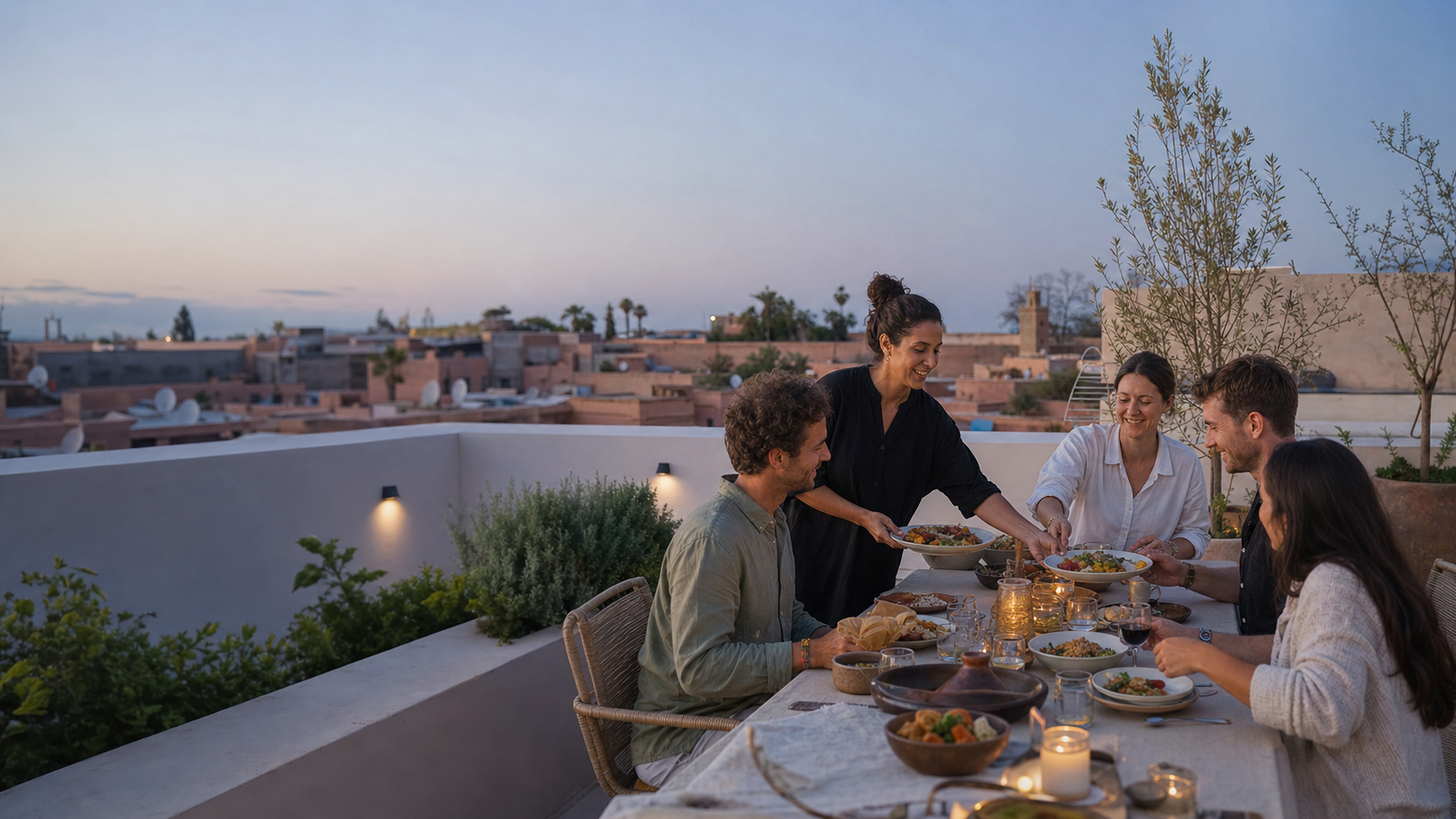
Marrakech cuisine is bolder, spicier and more robust than Fez. The city's signature dish is tanjia — slow-cooked lamb in a clay urn, traditionally prepared by bachelors and cooked in the ashes of the hammam furnace. Street food is king in Marrakech: the Jemaa el-Fna night market is legendary. Marrakech uses more chilli, more cumin and more preserved lemon than the north. The city's Berber heritage shows in simpler, more ingredient-driven dishes.
The coast: seafood dominance
Essaouira, Agadir, Casablanca and the Atlantic coast cities revolve around seafood. Grilled sardines, fish tagine with chermoula, fried calamari, and seafood pastilla replace the meat-heavy inland cuisine. The coastal cities also show more French and Portuguese culinary influence. Fish is grilled simply over charcoal at port-side stalls — the freshest and cheapest seafood you will find anywhere in Morocco.
The Rif and northern Morocco
The Rif mountains and northern cities (Chefchaouen, Tetouan, Tangier) show strong Spanish influence. Tapas-style small plates, tortilla española, and olives feature heavily. The cheese from the Rif (jben) is one of the few Moroccan cheeses. The north uses more olive oil and less preserved butter (smen) than the south. Tetouan's cuisine is considered the most refined in the north, with delicate pastries and aromatic tagines.
The Atlas mountains: Berber simplicity
High Atlas Berber cuisine is defined by what grows at altitude: walnuts, almonds, barley, root vegetables, goat and sheep. Dishes are simpler but deeply flavoured. Tandir bread (baked in an underground clay oven), amlou (almond-argan butter), and hearty barley couscous are staples. Meat is precious — a whole roasted lamb or goat is reserved for celebrations. Berber omelette (a thick egg-and-vegetable dish cooked over a wood fire) is a mountain classic.
The Sahara: nomadic cooking
Desert cuisine is born of scarcity and ingenuity. Madfouna (the Berber pizza — a stuffed bread baked in desert sand) is the signature dish. Mint tea is prepared with great ceremony. Dates, particularly from Errachidia and Zagora, are central. Camel meat appears in tagines and grills. Bread is baked in sand or on hot stones. The cooking is minimal and ingredient-driven — there is nowhere to hide in desert cuisine.
Frequently asked questions
Which region has the best food?
Fez for refined cuisine and pastry. Marrakech for street food and bold flavours. Essaouira for seafood. The Atlas for authentic Berber cooking. There is no single best — each region excels at its own tradition.
Can I taste regional differences in one city?
To some extent — Marrakech and Casablanca have restaurants serving dishes from across Morocco. But the real regional differences emerge when you travel. A fish tagine in a port-side stall in Essaouira cannot be replicated in Marrakech.