Food culture
Moroccan Food Etiquette: The Complete Guide
Moroccan dining has its own etiquette — different from Western norms but easy to learn and deeply rewarding to follow. Moroccans are generous and forgiving hosts who will never embarrass a guest, but understanding the customs shows respect and enriches the experience.
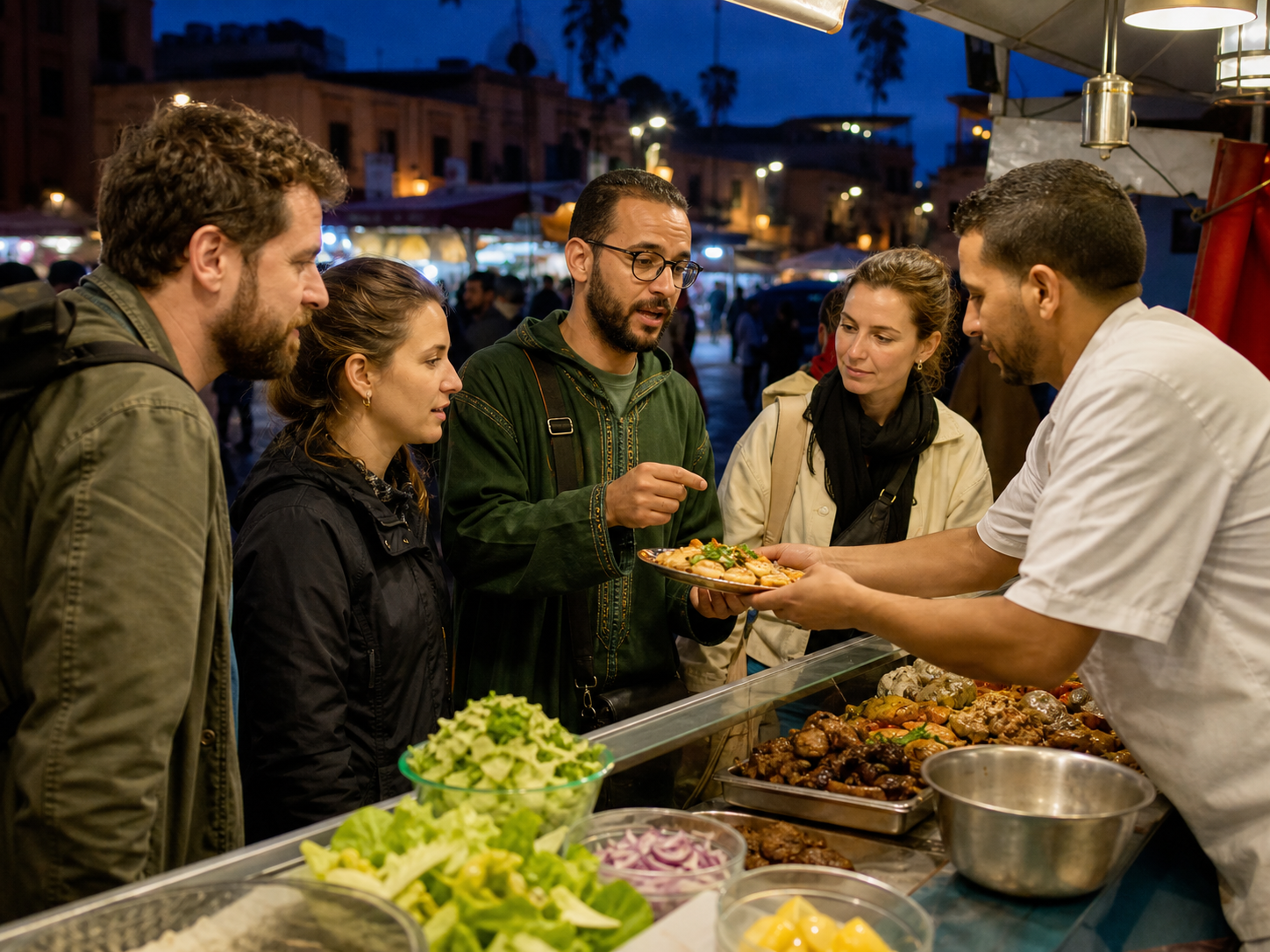
Before eating
Wash your hands. A hand-washing ritual happens before every Moroccan meal — the host brings a basin, pitcher and towel to each guest. In restaurants, you wash at a basin or use wet wipes. Say 'Bismillah' (in the name of God) before the first bite. This is universal — religious and secular Moroccans alike say it. If you are not comfortable, a simple nod is fine.
Eating with your hands
Eat with your right hand only. The left hand is considered unclean in Moroccan culture (this is not optional — it is one of the few rules that genuinely matters). Tear bread with your right hand, scoop food with bread using your right hand, and eat from the section of the communal dish directly in front of you. The host may push choice pieces of meat toward you — this is an honour.
Communal eating
Most Moroccan meals are served in shared dishes placed in the centre of the table. Each person eats from the portion of the dish closest to them — reaching across to the far side is impolite. If there are communal salads, take from the side nearest you. The host traditionally serves guests from the centre of the dish, placing the best cuts of meat in front of them.
Tea ceremony
Mint tea is served after meals and throughout the day. The host pours from a height — this aerates the tea and creates a froth. Refusing tea is considered impolite (accept at least one glass). Three glasses is traditional — there is a saying: the first glass is gentle like life, the second is strong like love, the third is bitter like death. You may politely decline the third.
Refusing food gracefully
Moroccan hospitality is generous — hosts will press food on you repeatedly. Saying 'no' once is interpreted as polite modesty, not refusal. Say 'Hamdullah' (praise God) and place your hand over your heart to signal that you are genuinely full. The host will still offer again — this is normal. A gentle, smiling 'Baraka' (enough) eventually works.
Frequently asked questions
Will Moroccans be offended if I use cutlery?
No — especially in tourist-facing restaurants. But eating with your hands (and bread) at a Moroccan home or riad dinner is expected and appreciated. It is easier than it looks.
Should I remove my shoes?
At a private home, follow the host's lead. If they remove shoes at the door, do the same. At restaurants and riads, shoes stay on unless you are seated on floor cushions.