Food culture
Moroccan Breakfast: A Complete Guide
Moroccan breakfast is a bread-centric feast of textures and spreads — a gentle, generous start to the day that centres on freshly baked breads, honey, olive oil, and mint tea. At riads, breakfast is often the most memorable meal of the stay. On the street, it is quick, cheap, and deeply satisfying.
The breads
Moroccan breakfast revolves around bread, and the variety is extraordinary. Msemen: square, layered, butter-laminated flatbread — Morocco's answer to a croissant, but cooked on a griddle. Beghrir: thick spongy pancakes with hundreds of tiny holes on the surface that soak up butter and honey like sponges. Harcha: semolina griddle cakes, dense and crumbly. Khobz: the standard round bread, torn and dipped. Baghrir: (different from beghrir in some regions) a thinner, crêpe-like pancake. Each household has favourites; a riad breakfast may offer three or four types.
The spreads and accompaniments
Bread is paired with: amlou (a paste of argan oil, almonds and honey — the Moroccan Nutella), butter, olive oil, honey (thyme honey from the Souss region is prized), jam (fig, apricot, orange), fresh goat or cow cheese (jben), and Laughing Cow processed cheese (ubiquitous at Moroccan breakfast tables, surprisingly). Eggs — boiled, fried or scrambled — appear but are not the centrepiece. Fresh orange juice, squeezed to order, is standard. Mint tea closes the breakfast.
Riad breakfast
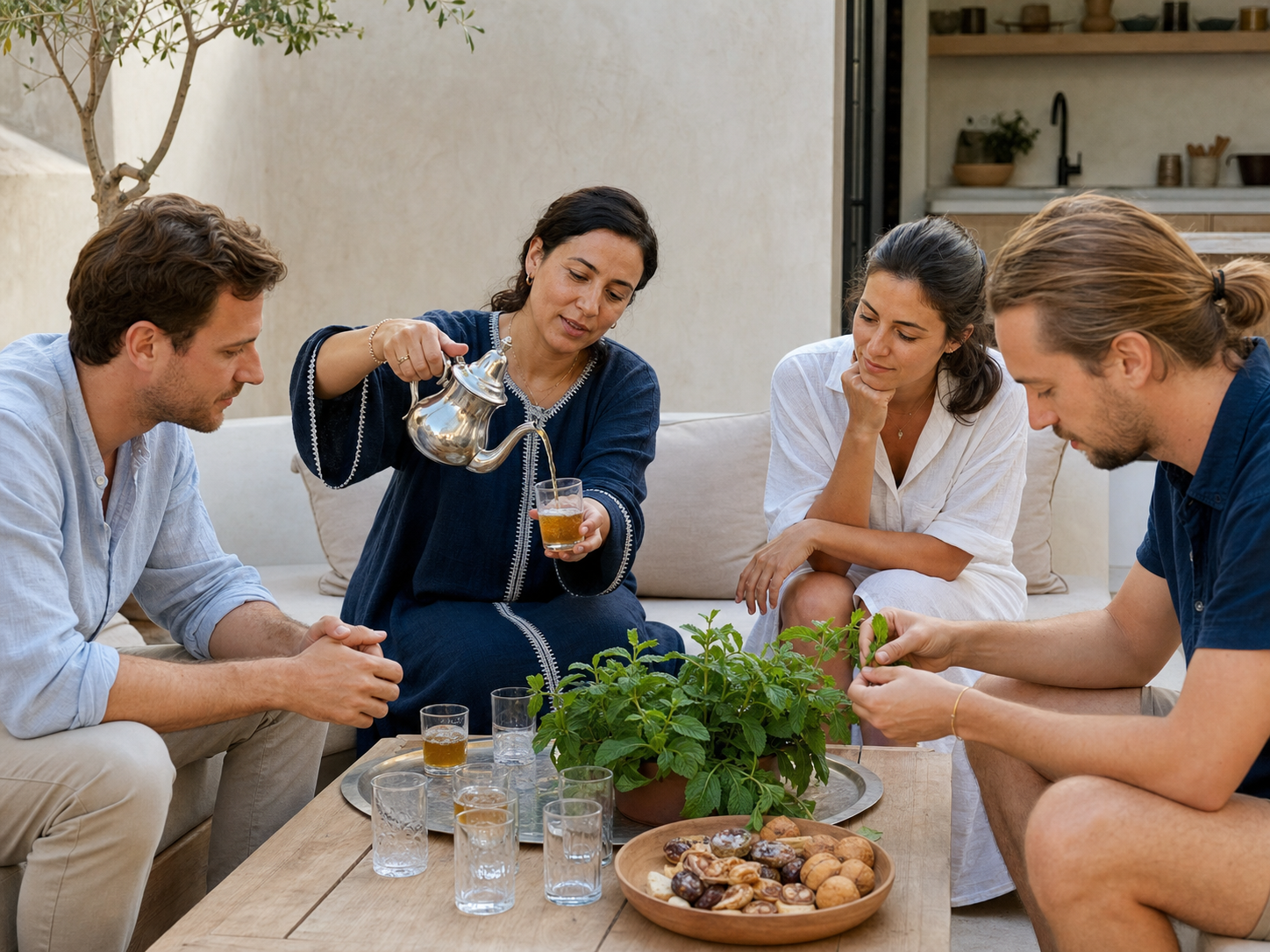
At a riad, breakfast is a theatrical event: a table on a courtyard terrace, laden with breads, pastries, juices, fruit, yoghurt, olives, eggs, and endless mint tea. It is included in the room rate and is almost always worth waking up for. The best riads bake msemen and beghrir to order. Riad breakfast typically runs 8:00-10:30 and lasts 45-90 minutes. It is one of the highlights of staying in a Moroccan riad.
Street breakfast
On the street, breakfast is faster: a msemen or harcha from a griddle vendor (3-5 MAD), a glass of fresh orange juice (5-10 MAD), and a café noir or noss-noss (half coffee, half milk) at a café (8-15 MAD). Total cost: 15-30 MAD. Many Moroccans eat breakfast at a neighbourhood café, sitting at tiny tables on the pavement, reading the paper, watching the world. This is breakfast at its most authentic.
Frequently asked questions
Is Moroccan breakfast sweet or savoury?
Both. The breads are neutral; the spreads are sweet (honey, amlou, jam) and savoury (olive oil, cheese, olives). Most Moroccans combine both at the same meal — honey on one piece of msemen, olive oil and cheese on the next.
What time do Moroccans eat breakfast?
7:00-9:00 AM in most households. Riads serve 8:00-10:30. Cafés open at 6:00-7:00 AM. Street food vendors start their griddles at dawn.