Class type
Marrakech Cooking Class Prices: What to Expect and How to Choose
Cooking class prices in Marrakech range widely, and the cheapest option is not always the worst value — nor is the most expensive always the best. Understanding what drives the price helps you choose a class that matches your budget and expectations. This guide breaks down what you get at each price level so you can book with confidence.
- Duration
- Varies — 2 hours (budget) to full day (premium)
- Group size
- Varies — large group (10-15) to private (2-4)
- Level
- All levels across all price bands
- Price
- Budget to luxury — full spectrum
- Pickup
- Can be included in the quote
What this class covers
At the budget end, expect a larger group (8-15 people), a shorter session (2-3 hours), and a simpler menu — typically one tagine, a salad, and bread. The kitchen may be basic, and the instruction more demonstration than hands-on. Budget classes are genuine and the food is real, but the personal attention is limited. These work well for solo travellers and backpackers who want the experience without a heavy outlay.
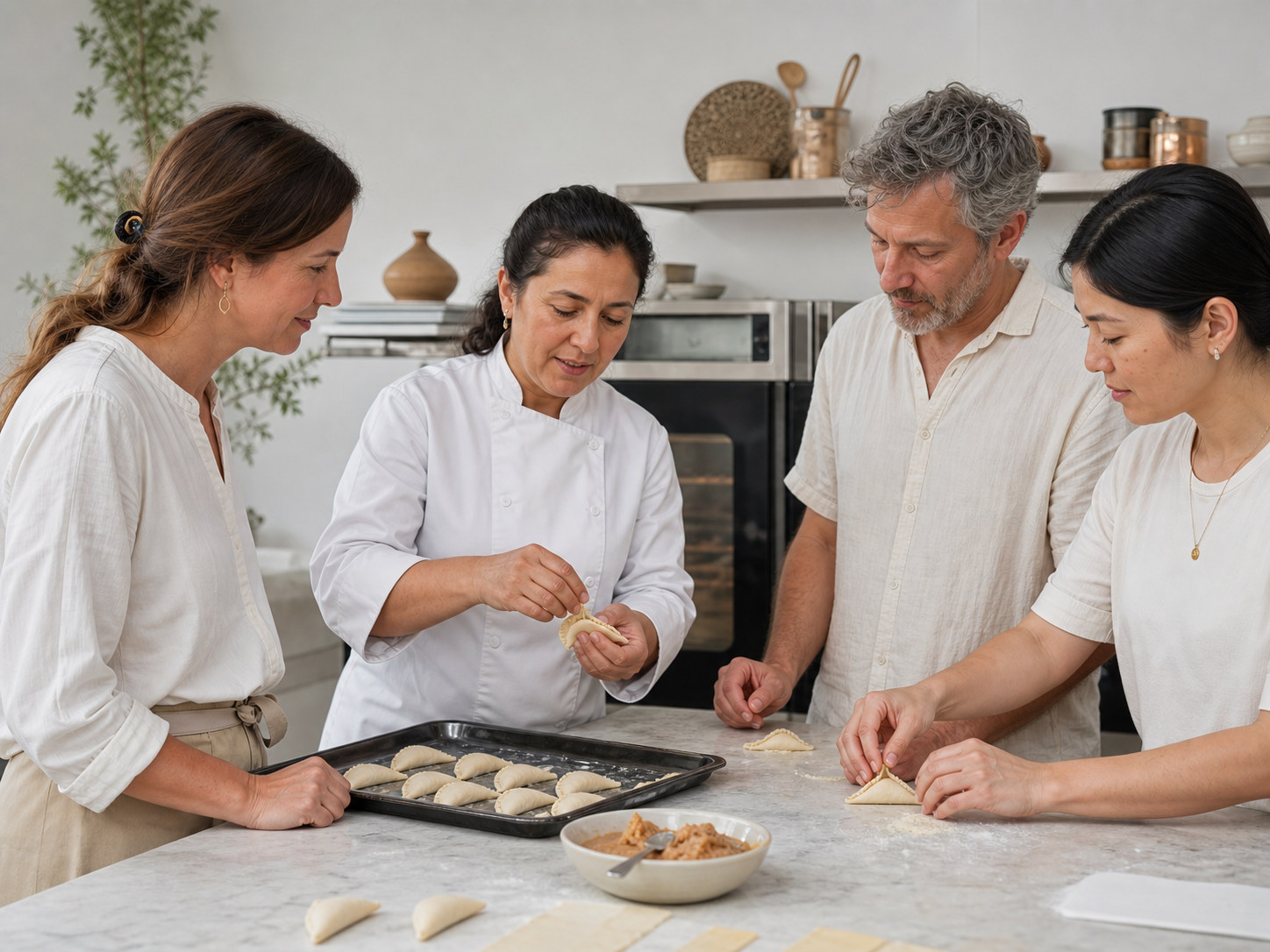
Mid-range classes are the sweet spot for most visitors. Groups are smaller (4-8 people), sessions run 3-5 hours, and the menu covers three or four dishes plus tea. You cook hands-on rather than watch, and the kitchen is usually a riad courtyard or a purpose-built teaching space. A market visit is often included. This is where the majority of Marrakech cooking classes sit, and where quality and value intersect most reliably.
Premium and luxury classes are private or semi-private (2-4 people), run half-day to full-day, and include extras — a guided souk tour with a dedicated guide, a wider menu (five or more dishes), wine or cocktail pairing in some cases, and a beautifully styled kitchen or rooftop setting. Some luxury classes take place in boutique riads or private villas with a professional chef rather than a home cook. You pay for exclusivity, pace, and polish.
What you'll cook
- Budget class menu — Typically one tagine, one salad, bread, and tea — straightforward but satisfying.
- Mid-range class menu — Usually a tagine, two or three salads, bread, a pastry or dessert, and tea — a full Moroccan meal.
- Premium class menu — Five or more dishes: tagine, couscous, pastilla or briouates, multiple salads, dessert, and a full tea ceremony.
- Full-day class menu — Morning and afternoon sessions covering different techniques — bread and pastry in the morning, tagine and couscous in the afternoon.
How the class runs & how long it takes
-
Budget (2-3 hours)
Brief introduction, cooking one main dish and sides, shared meal.
-
Mid-range (3-5 hours)
Market visit or ingredient tour, cooking three or four dishes, sit-down meal with tea.
-
Premium (4-6 hours)
Guided souk tour, extended cooking session with multiple courses, styled dining experience.
-
Full-day (6-8 hours)
Morning market tour, two cooking sessions with a break, multi-course lunch or dinner.
What to expect
Expect the price to correlate most strongly with group size and duration, not with food quality. A budget class uses the same fresh ingredients from the same souks as a luxury class — the difference is how much personal attention you receive and how many dishes you prepare.
Expect to pay more for private classes, classes with dedicated market guides, and classes in high-end riad settings. These are real cost differences — a private guide and a boutique riad kitchen cost the host more to operate.
Expect the best value in the mid-range. You get small-group attention, a full menu, and a genuine hands-on experience without the premium surcharge. Budget classes are fine for a taste of the experience, and luxury classes are worth it for special occasions, but mid-range is where most visitors find the right balance.
Usually included
- Varies by price band — see overview for detailed breakdowns
Who this class suits
- Budget travellers who want to understand what they get at the lower price point
- Mid-range visitors comparing options across different schools
- Couples or families considering a private luxury experience for a special occasion
- Anyone trying to decide between a budget group class and a more expensive private option
How to choose the right class
- Compare what is included, not just the headline price — a class that includes a market tour and five dishes may be better value than a cheaper one with three dishes and no tour.
- Check the group size. A mid-range class with six guests often delivers a better experience than a budget class with fifteen.
- Read what previous guests say about hands-on time versus demonstration. The most common disappointment is paying for 'hands-on' and spending most of the time watching.
- Consider the setting. If cooking in a beautiful riad courtyard matters to you, that is worth a small premium over a basic kitchen.
- Ask about extras: printed recipes, aprons to keep, or transfers to and from your hotel can shift the value calculation.
Frequently asked questions
What is the cheapest cooking class in Marrakech?
Budget group classes are available and offer a genuine introduction to Moroccan cooking. You will cook fewer dishes and share attention with more people, but the food quality is the same — ingredients come from the same souks regardless of price.
Is a more expensive class always better?
Not necessarily. A higher price usually means smaller groups, longer sessions, and a nicer setting — but the core cooking techniques and ingredients are the same across price levels. The best class is the one that matches your priorities.
What does the price include?
Nearly all Marrakech cooking classes include ingredients, equipment, instruction, and a sit-down meal of what you cook. Market tours, transfers, printed recipes, and aprons vary by provider and price level.
Should I book a private class or a group class?
Private classes offer personal attention and flexible pacing, which is ideal for serious home cooks or special occasions. Group classes are more social and significantly cheaper per person. Both teach the same dishes.
Do children affect the price?
Many hosts charge a reduced rate for children under 12, and some offer free participation for very young children. Ask when booking — policies vary.
Try the recipes at home
Booked, or just browsing? These free step-by-step recipes cover the dishes this class teaches: