Class type
Advanced Moroccan Cooking Class in Marrakech
Most cooking classes in Marrakech are designed for beginners, and if you already cook confidently at home, the standard tagine-and-bread format may feel too basic. An advanced class assumes you can hold a knife, manage heat, and follow a recipe — and moves straight to the techniques that make Moroccan cuisine distinctive: hand-rolling couscous grains from semolina, assembling the many-layered pastilla, blending a nuanced ras el hanout, and understanding the slow braising that no shortcut can replicate.
- Duration
- 4-6 hours
- Group size
- Private or small group (2-6)
- Level
- Intermediate to advanced — some cooking experience expected
- Price
- Premium
- Pickup
- Can be included in the quote
What this class covers
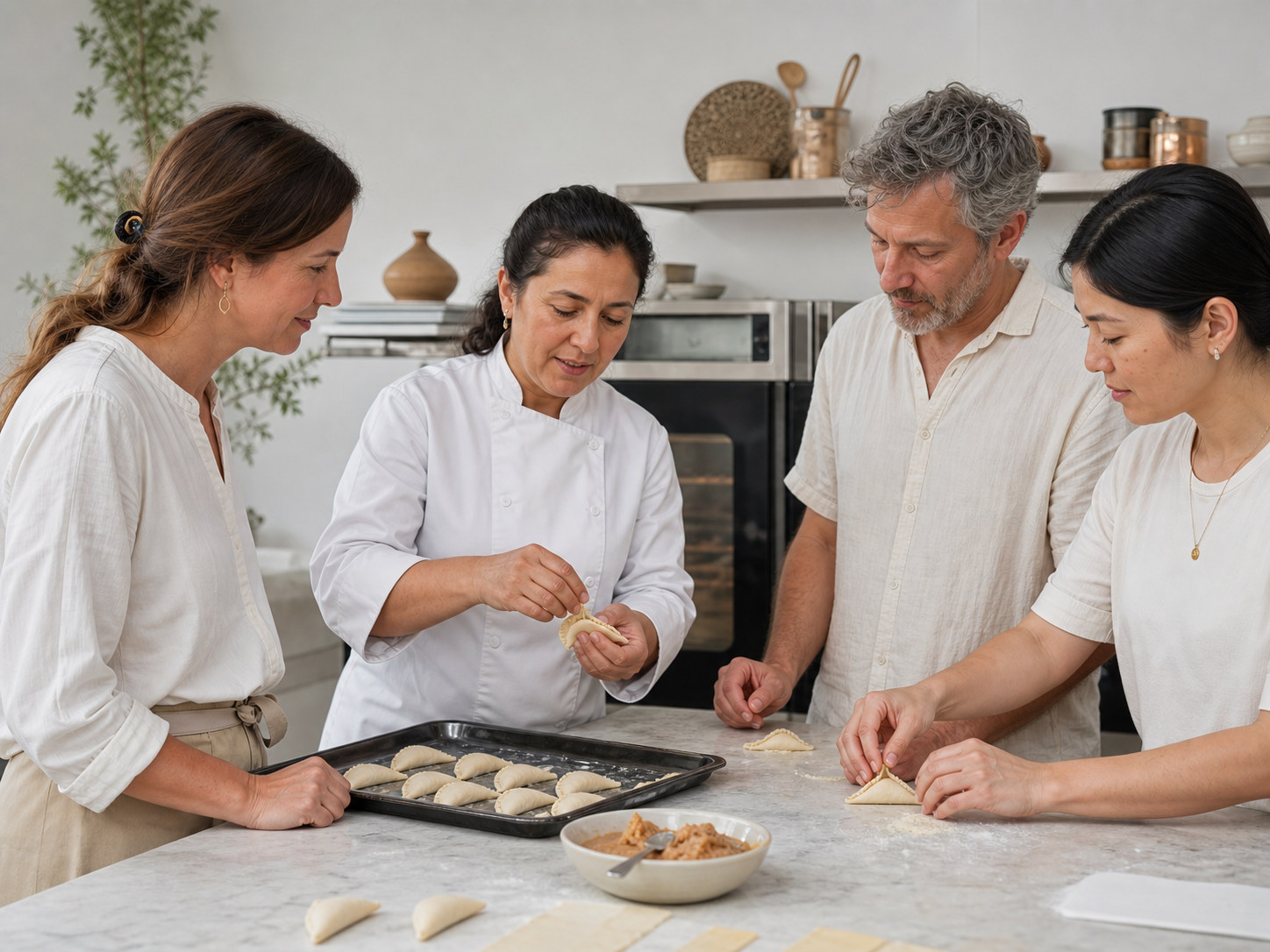
An advanced class typically covers dishes that beginner classes avoid because they are time-consuming or technically demanding. Hand-rolled couscous requires a specific kneading and steaming technique that takes patience to master. Pastilla involves layering warqa (paper-thin pastry), building the filling, and sealing the whole structure before baking. These are not difficult in the sense of requiring professional training, but they demand attention and practice.
Spice work goes deeper. Instead of using a pre-mixed ras el hanout, you build one from scratch — toasting, grinding, and balancing twenty or more spices to create a blend tuned to a specific dish. You learn why saffron is bloomed in warm water before adding, why ginger goes in early and cinnamon goes in late, and how to adjust a spice blend mid-cook rather than following a fixed recipe.
The pacing is different from a beginner class. There is less explanation of what a tagine is and more focus on why the onion base must cook for forty minutes before adding meat, or how the temperature of the couscous steamer affects grain texture. Your instructor may be a professional chef, a culinary guide, or an experienced dada (traditional cook) who has been cooking these dishes for decades.
What you'll cook
- Pastilla (b'stilla) — The full multi-layered pie — warqa pastry, slow-cooked pigeon or chicken filling, almonds, cinnamon, and powdered sugar.
- Hand-rolled couscous — Made from scratch with semolina flour, water, and olive oil — rolled, steamed, and fluffed three times.
- Complex tagine — A tagine with multiple layers — such as lamb with artichoke hearts, peas, and preserved lemon — requiring staged additions and careful timing.
- Custom ras el hanout — Your own blend from 15-25 whole spices, toasted and ground to order.
- M'hanncha (snake cake) — A coiled almond pastry shaped in a spiral, baked until golden and dusted with cinnamon.
How the class runs & how long it takes
-
Technique briefing
Review the day's menu, discuss techniques, and examine specialist ingredients — saffron, aged preserved lemons, warqa pastry.
-
Spice blending
Toast and grind a custom ras el hanout blend, tasting components individually and discussing balance.
-
Extended cooking
Build the pastilla, roll couscous, layer the tagine — 2-3 hours of focused, hands-on work.
-
Multi-course meal
Sit down to a full five-course Moroccan meal of everything you prepared, with detailed discussion of what worked and what to adjust.
What to expect
Expect to be challenged. This is not a class where you watch and stir occasionally — you will be rolling couscous grains by hand, layering warqa pastry without tearing it, and adjusting seasoning in real time. Mistakes are part of the learning.
Expect depth over breadth. A beginner class might cover five dishes quickly; an advanced class might spend an hour on couscous alone, because the technique rewards patience. You will leave with fewer recipes but much deeper understanding.
Expect your instructor to treat you as a fellow cook. Questions about technique, flavour balance, and adaptation are encouraged. This is a workshop, not a show.
Usually included
- Specialist ingredients (saffron, argan oil, aged preserved lemons)
- Extended hands-on instruction
- Multi-course meal of complex dishes
- Detailed recipe notes with technique breakdowns
Who this class suits
- Experienced home cooks who find beginner classes too slow or too simple
- Food professionals, chefs, and culinary students seeking Moroccan technique depth
- Return visitors to Marrakech who have already taken a standard cooking class
- Serious food enthusiasts who want to understand the 'why' behind Moroccan methods
Maybe not for you if: Complete beginners or travellers looking for a relaxed, social cooking experience — this class is focused and technique-driven.
How to choose the right class
- Ask about the instructor's background — is this a professional chef, a culinary guide, or a traditional home cook? Each brings different strengths.
- Confirm the menu includes technique-heavy dishes like pastilla or hand-rolled couscous, not just a more expensive version of the standard tagine class.
- Check whether you can request specific dishes or techniques — advanced classes are often customisable if booked privately.
- Ask about the student-to-instructor ratio. Advanced technique benefits most from one-on-one or very small-group instruction.
Frequently asked questions
How experienced do I need to be?
You should be comfortable with basic knife skills, managing multiple pots, and following complex recipes. You do not need professional training — confident home cooks will do well.
Can I request specific dishes?
Most advanced classes are flexible, especially if booked privately. If you specifically want to learn pastilla or hand-rolled couscous, request it when booking so the instructor can prepare.
Is this class worth the higher price?
If you already cook well and found beginner classes too basic, yes. The value is in technique depth, specialist ingredients, and extended one-on-one instruction — not just a longer session.
Will I get detailed recipes to take home?
Yes — advanced classes typically provide more detailed notes than beginner classes, including technique breakdowns, spice ratios, and timing guides rather than just ingredient lists.
Try the recipes at home
Booked, or just browsing? These free step-by-step recipes cover the dishes this class teaches: