Comparison · Cuisines compared
Moroccan vs Spanish Food
Morocco and Spain are separated by 14 kilometres of water at the Strait of Gibraltar, and for 800 years of Al-Andalus, they shared a kitchen. The heritage is visible in both directions: Moroccan pastilla resembles Andalusian pies; Spanish gazpacho echoes Moroccan chilled soups. But the cuisines diverged. Morocco deepened its spice palette; Spain leaned into olive oil and seafood. This comparison traces the overlap and the split.
- Read
- 7 min
- Comparing
- Moroccan cuisine vs Spanish cuisine
- Updated
- 23 July 2026
The short answer
In one paragraph
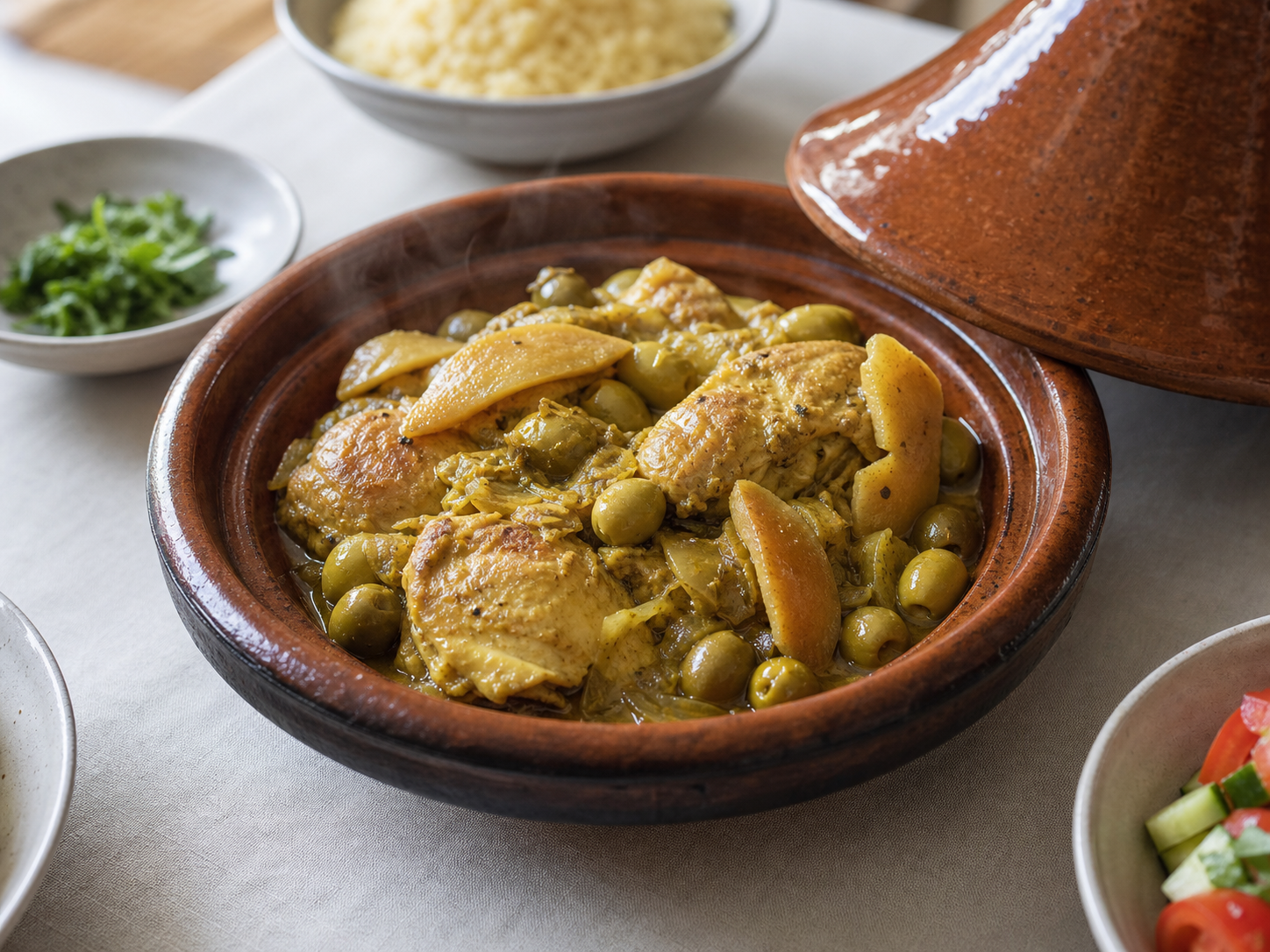
Moroccan food is spice-forward (ras el hanout, saffron, cumin, cinnamon), slow-cooked (tagines, couscous) and sweet-savoury (lamb with prunes, sugar on pastilla). Spanish food is ingredient-forward (olive oil, garlic, tomato, seafood), technique-varied (tapas, paella, grilled) and more acidic (sherry vinegar, citrus). Both use saffron, almonds and citrus — the Andalusian inheritance.
The key difference: Morocco spices; Spain lets ingredients speak with minimal seasoning.
Side by side
At a glance
A side-by-side of the differences that matter.
| Aspect | Moroccan cuisine | Spanish cuisine |
|---|---|---|
| Spice intensity | High (complex blends) | Low (olive oil, garlic, saffron) |
| Signature dish | Tagine | Paella / tapas |
| Dining format | Large shared plates | Small plates (tapas) or courses |
| Olive oil use | Moderate (dipping, dressing) | Central (cooking base, finishing) |
| Seafood | Coastal only (Essaouira, Tangier) | Nationwide staple |
| Sweet-savoury | Very common | Rare |
| Shared heritage | Almonds, saffron, citrus, pastry | Almonds, saffron, citrus, pastry |
You will prefer Moroccan food if
You love warm spices, slow-cooked dishes, and bold sweet-savoury combinations. Moroccan food is comfort food elevated by a spice tradition that has been refined over centuries. The tagine is the medium; the spice is the message.
You will prefer Spanish food if
You love clean, ingredient-driven flavours, seafood, and the social format of tapas. Spanish food lets the olive oil, the tomato and the fish do the talking. The technique is lighter; the ingredients carry the weight.
The Andalusian connection
Eight hundred years of shared history left both cuisines with almonds in pastries, saffron in rice and grain dishes, citrus in sauces, and a love of slow-cooked meats. Moroccan pastilla is a close relative of Andalusian pastry pies. Spanish gazpacho may have roots in Maghreb chilled soups. The exchange went both ways, and the traces are still visible on both sides of the Strait.
The bottom line
Fourteen kilometres of water produced two cuisines that share roots but diverge beautifully. Cross the Strait in either direction and you will taste both the connection and the difference.
Frequently asked questions
Is there Moroccan food in southern Spain?
Yes. Andalusia (especially Granada, Córdoba and Seville) has Moroccan restaurants and tea houses, and many Andalusian dishes carry Moorish traces: almonds, saffron, orange blossom.
Which cuisine uses more saffron?
Both use significant amounts. Morocco uses saffron in tagines and couscous broth. Spain uses saffron in paella, fabada and various rice dishes. Moroccan saffron from Taliouine and Spanish saffron from La Mancha are both world-class.